







The Challenge of Finding New Worlds
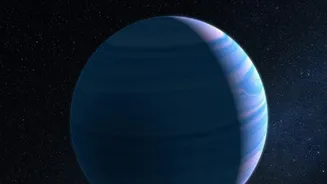
To find a distant planet, or exoplanet, astronomers often use the “transit method.” They point powerful telescopes at a star and watch for a tiny, periodic dip in its brightness. This dimming can be a tell-tale sign that a planet is passing in front of its star from
our point of view. For massive, Jupiter-sized planets, this dip is more obvious. But for smaller, rocky worlds similar to Earth, the signal is incredibly faint and easy to miss. This method has been used to discover thousands of planets, but it has a fundamental weakness. Not everything that causes a star to dim is a planet, and this is where the search gets complicated, requiring new and innovative technological solutions.
The Cosmic Impostor: Star Spots
The main culprit behind these false signals are star spots. Much like the sunspots on our own sun, star spots are cooler, darker, and magnetically active patches on a star’s surface. From light-years away, we can’t see these spots directly. But as a star rotates, these large, dark areas can move across its face, causing a dip in the star’s total brightness that can look almost identical to the transit of a planet. This “stellar contamination” can trick scientists into thinking they’ve found a planet when they haven’t, or it can obscure the signal of a real planet, making it impossible to study its atmosphere. This is a particularly big problem for the small, cool stars that are the most common in our galaxy and are considered prime targets in the search for habitable worlds.
Enter Pandora: A Dedicated Detective
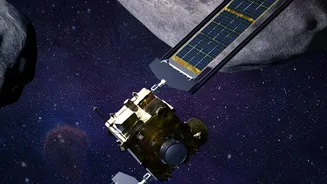
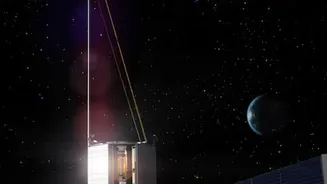
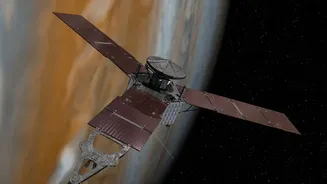
To solve this problem, NASA developed the Pandora mission. Launched in early 2026, Pandora is a SmallSat—a low-cost, compact satellite—with a very specific job: to untangle the light from a star and its planet. Selected as part of NASA's Astrophysics Pioneers program, the mission will focus on at least 20 exoplanets and their host stars. Unlike massive observatories like the James Webb Space Telescope (JWST), which have packed schedules, Pandora is designed for long, patient observation. It will stare at each target system for extended periods, gathering the precise data needed to separate the two signals and give scientists a clear picture of what's really happening.
A Tale of Two Colors
Pandora's clever solution lies in its ability to see in two different kinds of light simultaneously. The satellite is equipped with a telescope that splits light into a visible channel and a near-infrared channel. This is the key to telling a planet and a star spot apart. A planet is an opaque object; when it passes in front of its star, it blocks all wavelengths of light equally. The star will appear just as dim in visible light as it does in infrared light. A star spot, however, is different. Because it's a temperature variation on the star's surface, its dimming effect is more pronounced in visible light than in infrared light. By comparing the data from both channels, scientists can create a model of the star's activity and subtract it, cleaning the data to reveal the true, uncontaminated signal from the planet's atmosphere.
Paving the Way for Future Discoveries
The Pandora mission is more than just a clever piece of technology; it's a vital tool that will make other missions more effective. By providing clean data on planetary atmospheres, Pandora will help astronomers identify the most promising targets for in-depth study by powerful instruments like the JWST. Its primary goal is to help scientists confidently identify planets with hydrogen- or water-dominated atmospheres and determine which are likely covered in clouds or hazes. By solving the star spot problem, Pandora is refining our methods for exploring the galaxy and taking a critical step forward in the quest to find out if we are alone in the universe. The mission will help ensure that when we think we have found a world with water in its atmosphere, we are not just being fooled by an unstable star.