





The Landmark Arrival
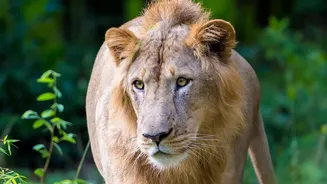
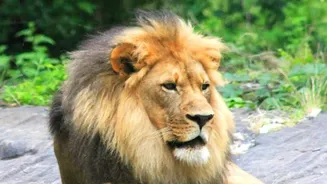
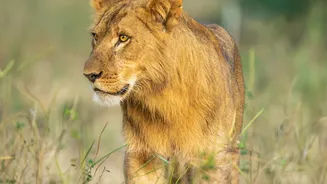
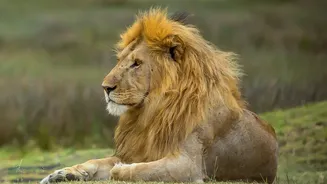
The historic return began in January 2023, when a lone, radio-collared male lion, approximately three and a half years old, naturally dispersed from its territory near the Gir forest and ventured into Barda. This journey of about 100 kilometres was a monumental
event, confirming the long-held belief that Barda could serve as a viable habitat. Following this pioneering male's arrival, the Gujarat Forest Department augmented this new population by introducing five female lions to the sanctuary, a crucial step toward establishing a breeding population. Recent studies and reports from 2025 and 2026 confirm that the sanctuary is now home to a growing family of lions, a testament to the success of this new beginning.
A Sanctuary Lost and Regained
The significance of this return is rooted in history. The last official record of a lion in the Barda landscape dates back to 1879. Reckless hunting and habitat loss during the colonial era decimated the Asiatic lion population across India, eventually confining the last surviving members to the Gir forests. For nearly a century and a half, Barda, which was once part of the lion's natural territory, remained silent. Declared a wildlife sanctuary in 1979, the government has since been working to restore its ecosystem. This included augmenting the prey base by translocating hundreds of chital (spotted deer) and sambar, ensuring that the returning predators would have a sustainable food source.
Why a Second Home Is Crucial
For decades, wildlife experts have warned of the risks of having the world's entire wild population of a species in one location. The approximately 674 Asiatic lions in Gujarat, while a conservation triumph, have been geographically isolated in and around Gir National Park. This concentration makes the entire population vulnerable to catastrophic events like disease outbreaks—such as the Canine Distemper Virus that caused deaths in 2018—or natural disasters. Establishing a second, separate, free-ranging population in Barda is an ecological insurance policy. It helps ensure the long-term survival of the species by creating genetic resilience and a buffer against unforeseen calamities, a core objective of the central government's 'Project Lion'.
Project Lion and Barda's Future
This milestone aligns perfectly with the vision of Project Lion, a conservation initiative announced in 2020 to manage the growing lion population through a landscape-level approach. While the Supreme Court had ordered the translocation of lions to Kuno National Park in Madhya Pradesh back in 2013, the plan has seen significant delays. In contrast, the establishment of a population in Barda, within Gujarat itself, has been a state-led priority. The Barda Wildlife Sanctuary, spanning over 192 square kilometres, has been identified as a landscape with suitable terrain, forest cover, and water availability to support a permanent lion population. Studies tracking the radio-collared lions have shown they are adapting well, establishing home ranges and forming social bonds.
The Road Ahead: Challenges and Hopes
While the return of lions to Barda is a cause for celebration, it also marks the beginning of a new set of responsibilities. Managing a new predator population requires constant monitoring and effort. This includes ensuring the prey base remains robust, preventing human-animal conflict in the villages surrounding the sanctuary, and maintaining the ecological corridors that connect Barda to the greater Gir landscape. The Gujarat Forest Department has already restructured the local division to enhance patrolling and wildlife management operations in the area. Local communities are also being involved through new ecotourism initiatives, aiming to create livelihoods that are linked to the success of conservation. The hope is that Barda will not just be a satellite population, but a thriving, self-sustaining stronghold for the King of the Jungle.