





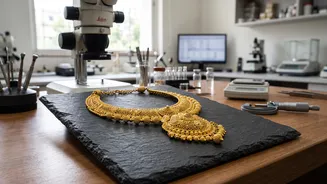


The Rhenium Adulteration Scare
Recent media investigations, particularly one reported out of Jodhpur, Rajasthan, have highlighted a worrying new trend in gold adulteration. The method involves mixing a rare, heavy industrial metal called Rhenium with gold. Because Rhenium is very dense—even
denser than gold—it can increase the weight of a piece of jewellery without being easily detected by simple density checks. Unlike more common and lighter adulterants, Rhenium's properties allow it to mimic gold more effectively, posing a significant challenge to standard purity verification processes. The core of the problem is economic: Rhenium costs significantly less than gold, creating a substantial financial incentive for fraudsters to use it to replace a portion of the gold in an ornament.
How This Tricks Purity Testing Machines
The most concerning aspect of the reported Rhenium issue is its ability to fool the very machines designed to protect consumers. Most jewellers and hallmarking centres use X-ray fluorescence (XRF) machines, or 'karatmeters', for a quick, non-destructive analysis of gold purity. These machines scan the surface of the metal to determine its elemental composition. However, reports from the Jodhpur experiment suggest that some of these standard XRF machines failed to identify the presence of Rhenium. The adulterated item, which had an actual gold purity closer to 20 karats, was reportedly certified as 22-karat (91.6% pure) gold. Experts explain this can happen if the XRF machine's software is not specifically calibrated to detect Rhenium or if the adulterant is distributed unevenly within the alloy. This exposes a potential loophole in a system that millions rely on for assurance.
Is the 916 Hallmark Still Reliable?
The 916 hallmark, certified by the Bureau of Indian Standards (BIS), is the gold standard for purity in India, signifying that a piece of jewellery is 22-karat gold (91.6% pure). The mandatory hallmarking system, which includes a unique six-digit Hallmark Unique ID (HUID), was introduced to bring transparency and protect consumers from being cheated. This system is the most robust protection available and has been crucial in standardising the market. However, the integrity of the hallmark depends entirely on the accuracy of the testing performed at BIS-recognised Assaying and Hallmarking (A&H) centres. The Rhenium issue does not invalidate the hallmarking system itself, but it highlights a critical vulnerability: if the testing equipment at an A&H centre can be deceived, then a hallmark can be wrongfully applied.
How Consumers Can Protect Themselves
While industry bodies and the BIS will need to address these technological challenges, consumers are not helpless. Vigilance is your best tool. First and foremost, always buy from trusted, reputable jewellers with a long history of transparency. Be wary of deals that seem too good to be true or shops offering unusually high discounts on making charges. Always insist on a proper, itemised bill that clearly states the gross weight, net gold weight, purity (e.g., 22K916), and the HUID code for each piece. You can use the 'Verify HUID' feature on the BIS CARE mobile app to confirm the details of your hallmarked jewellery. While you cannot perform an XRF test yourself, asking questions and showing you are an informed buyer encourages accountability. By combining the assurance of the hallmark with your own diligence, you can significantly reduce your risk.