





The Epicentre of India's Coal Future
India's strategy to ensure energy security involves a significant increase in domestic coal production, with new mining proposals surging. A recent report from Global Energy Monitor highlighted that India's planned coal mining capacity nearly doubled
in 2025, a stark contrast to a global slowdown. This massive expansion is geographically concentrated, with the eastern states of Jharkhand and Odisha at its heart. These two states alone have seen proposals for new coal mines double, accounting for the vast majority of India's new planned capacity. The government's goal is to boost production to nearly 1.15 billion tonnes in the current fiscal year to meet rising electricity demand, driven by economic growth and more frequent, intense heatwaves.
Why Jharkhand and Odisha?
The concentration in Jharkhand and Odisha is no accident. These states are home to the Gondwana-age coalfields, which contain India's largest and highest-quality reserves of both thermal and coking coal. This geological advantage makes them the logical choice for scaling up production efficiently. The government aims to leverage this by commissioning new mines to reduce dependency on volatile international markets and expensive imports. Focusing development in these areas also offers logistical benefits, building on existing infrastructure and a workforce familiar with the mining industry. This strategy aligns with the ‘Atmanirbhar Bharat’ initiative, aiming for self-reliance in the coal sector to power the nation's industrial and domestic needs.
The Economic Rationale and Promised Gains
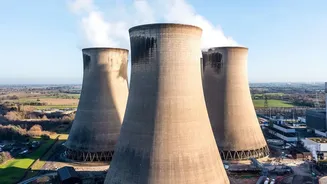
For the government, the economic case is compelling. Coal provides approximately 55% of the country's primary energy and fuels over 70% of its electricity generation. Expanding domestic production is framed as a direct path to energy security and economic stability. Recent auctions of coal blocks in these regions are projected to generate thousands of crores in annual revenue for the states. Furthermore, the government estimates that these new mining projects will attract significant capital investment and create tens of thousands of direct and indirect employment opportunities in these regions. In areas with limited alternative industries, coal mining is often presented as a crucial engine for local economic development and a lifeline for many communities.
The Environmental and Social Costs
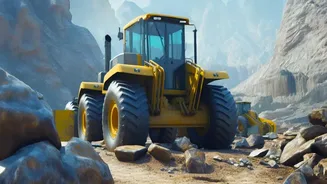
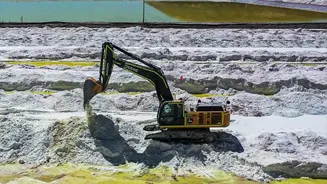
However, this intense focus on coal extraction comes with severe environmental and social consequences. Open-cast mining, the predominant method, requires clearing vast tracts of land, leading to deforestation and the destruction of natural habitats. Studies in India's coal belt have shown that mining degrades forest cover, shrinks water bodies, and renders agricultural land infertile. Water sources become polluted with toxic runoff and acid mine drainage, while air quality plummets due to dust and emissions from mines and transport, leading to widespread respiratory illnesses. The human cost is also immense. Land acquisition for mines frequently leads to the displacement of communities, particularly tribal and indigenous groups, who lose their homes, livelihoods, and cultural connections to the land. This process often creates new cycles of poverty and social disruption.
A National Balancing Act
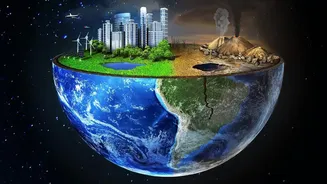
This concentration of coal projects in Jharkhand and Odisha encapsulates India's complex energy dilemma. On one hand, the country is rapidly expanding its renewable energy capacity, ranking third globally and aiming for 500 GW by 2030. On the other, coal remains the bedrock of its power grid, seen as essential for reliability and meeting surging demand that renewables cannot yet fully cover. While global trends show a shift away from coal, India's trajectory is a calibrated balancing act between ensuring affordable power for its growing population and meeting its long-term climate goals, including a net-zero target by 2070. The new mines are a hedge against energy shortages, but they also lock in decades of carbon emissions and deepen the environmental and social challenges in the country's mineral heartland.