





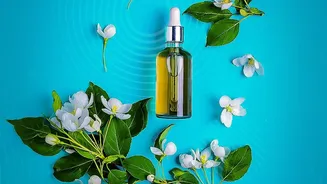
What Exactly Is Neroli Oil?
Neroli oil is an essential oil extracted from the delicate white blossoms of the bitter orange tree, also known as Citrus aurantium. The name itself is said to have been popularised in 17th-century Italy by a princess who loved to perfume her gloves and
bathwater with it. The oil is produced through a meticulous process of steam distillation, which requires a huge quantity of hand-picked flowers to yield a small amount of the precious liquid. This process captures the lighter, fresher, and greener aromatic compounds of the flower, distinguishing it from orange blossom absolute, which is extracted using solvents and has a heavier, sweeter scent. Its history is rooted in perfumery and aromatherapy, but its true power lies in its impressive benefits for the skin.
A Multi-Tasker for Healthier Skin
Neroli oil is far more than just a pleasant fragrance. It's packed with beneficial properties that address a wide range of skin concerns. Firstly, it's a fantastic moisturiser. As a natural humectant, it helps the skin attract and retain moisture, leaving it feeling soft and supple without a greasy residue. Its antioxidant properties, thanks to compounds like limonene, help protect the skin from environmental stressors and free radical damage that can lead to premature ageing. Furthermore, studies have pointed to its antimicrobial and anti-inflammatory properties. This makes it a valuable ally for those with blemish-prone skin, as it can help calm redness and irritation associated with breakouts.
Why 'Lightweight' Is Its Superpower
The single greatest advantage of neroli oil is its lightweight texture and ability to balance the skin. For those in humid climates or with oily and combination skin types, the thought of applying oil can be a deterrent. However, neroli is a game-changer. It has astringent properties that can help regulate sebum production, refining the appearance of pores without stripping the skin of its natural moisture. Its non-comedogenic nature means it won't clog pores, making it an excellent choice even for those susceptible to acne. This balancing act makes it uniquely versatile, suitable for dry and mature skin needing hydration, as well as oily skin that requires control.
How to Weave Neroli into Your Routine
Incorporating neroli oil is simple. You can look for it as a key ingredient in pre-formulated products like cleansers, toners, face mists, and moisturisers. For a more direct approach, you can create your own blend. Always remember that essential oils are highly concentrated and must be diluted before skin application. Add one or two drops of neroli oil to a carrier oil like jojoba or sweet almond oil and gently massage it into your skin as the last step of your nighttime routine. You can also boost your favourite moisturiser or a gentle cleanser by mixing in a single drop before use. For a spa-like treat, add a few drops to a bowl of hot water for a facial steam to open pores and calm the mind.
A Word on Safety and Quality
While neroli oil is generally considered safe for most skin types, it's crucial to take precautions. Because it is a potent essential oil, it should never be applied directly to the skin without being diluted in a carrier oil. Before using it for the first time, perform a patch test on a small area, like your inner arm, to check for any sensitivity or allergic reaction. Those with a known citrus allergy should avoid it. It's also worth noting that some citrus oils can increase sun sensitivity, so it’s often best to apply neroli oil blends at night. When purchasing, look for high-quality, pure, and therapeutic-grade oil to ensure you are getting the full benefits without unwanted additives.