




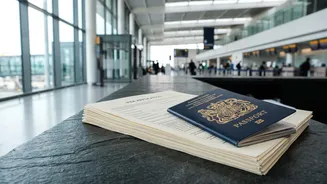
For many prospective travellers, the biggest hurdle isn't the price of a ticket, but the mountain of paperwork needed to get there. New findings from the airline industry confirm this, showing that complex visa rules are increasingly a top travel dealbreaker.
The Surprising Finding
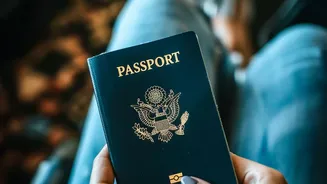
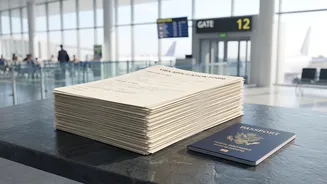
The International Air Transport Association (IATA) has put a number on a long-held suspicion: administrative hurdles are a massive barrier to international travel. According to its 2026 Global Passenger Survey, a staggering 43% of travellers have been discouraged from visiting a destination specifically because of its immigration requirements. This marks a significant jump from 33% just a year prior, indicating growing frustration among global passengers. What's most revealing is the reason why. It's not the money. The survey found that the sheer complexity of the process was the primary deterrent for 53% of these travellers. In contrast, the actual cost of the visa and privacy concerns were each cited by only 17% of respondents. This data suggests that even if a flight is affordable, the perceived hassle, uncertainty, and time involved in securing a visa are enough to make many people abandon their travel plans altogether.
The Ripple Effect on Economies
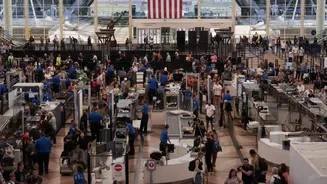
This travel friction has significant economic consequences that extend far beyond the airline industry. When travellers are deterred, the entire tourism value chain suffers. Fewer visitors mean less demand for hotels, local transport, restaurants, and tour packages, resulting in lost revenue for businesses and a weaker economic impact from tourism. Studies have shown that restrictive visa policies can reduce bilateral tourism flows by as much as 60% and even impact exports and foreign investment. For airlines, the issue is twofold. Not only do they lose potential revenue from passengers who never book, but they also bear significant costs when passengers are denied entry at the border. According to a separate IATA study, these costs, which include fines and repatriation flights, can range from approximately $4,000 to $14,000 per case. Airlines often end up paying these costs even when the refusal is due to reasons beyond their control, creating a major financial and operational burden.
A Particular Burden for Indian Travellers
For Indian passport holders, these findings are hardly surprising. Travellers from India frequently navigate some of the most demanding visa application processes for Western and other popular destinations. The IATA survey highlighted that passengers in the Asia-Pacific region were among the most likely to be discouraged by entry requirements, at 49%. This administrative burden can involve extensive documentation, in-person interviews, and long, uncertain waiting periods. The result is not just a barrier to leisure travel but a real obstacle for business, education, and family connections. The complexity acts as a filter, limiting opportunities to those with the time, resources, and persistence to navigate the bureaucracy, regardless of their ability to afford the trip itself.
A Clear Demand for Digital Solutions
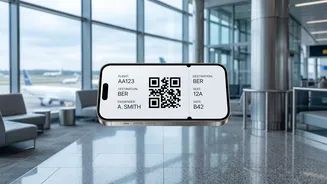
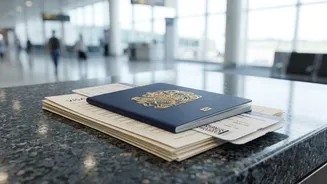
The frustration with paper-based systems is matched by a strong appetite for digital alternatives. The IATA survey shows passengers are overwhelmingly ready to embrace technology for a smoother journey. A full 86% of travellers said they are willing to share immigration information in advance to speed up the process. Furthermore, 60% prefer applying for a visa online, compared to just 25% who favour an in person visit to a consulate or embassy. The industry is responding, with biometric verification becoming more common at airports, and passengers reporting high satisfaction with the experience. The vision is a 'contactless' journey, where a secure Digital Travel Credential (DTC) — a digital version of a passport — allows a passenger to move from checkin to boarding using only biometric scans, without repeatedly showing physical documents.
The Path Forward : Smarter Borders
Ultimately , solving this problem requires government action . IATA is urging governments to simplify their entry requirements and invest in the technology needed for a seamless , secure travel experience . While over $100$ countries now issue e$-$visas , a lack of standardization in how they are verified creates confusion and risk for airlines . The call is for a globally harmonized system where digital travel authorizations can be issued and checked consistently . According to Nick Careen , IATA 's Senior Vice President , this isn ' t about compromising security . It ' s about using existing tools to eliminate unnecessary barriers and make travel more efficient . Adopting these digital solutions would not only meet passenger demand but could also unlock significant economic growth by making it easier for people to travel , connect , and do business across borders .