






A Market Reawakens
For the last three years, the story of India's entry-level car segment was one of decline. Squeezed by rising costs, stricter emission norms, and a consumer shift towards SUVs, the humble hatchback seemed to be losing its place. But a dramatic reversal
is now underway. Recent industry data shows a remarkable resurgence, with sales in the mini-car category surging. For instance, between April and August 2026, sales of Maruti’s key entry-level models jumped by an astonishing 96% year-on-year. This isn't just a minor uptick; it's a powerful signal that the foundational pillar of personal mobility in India, the affordable first car, is making a comeback. The revival is bringing a critical demographic back into the fold: the first-time buyer.
The Game-Changing Tax Cut
The single biggest catalyst for this turnaround has been a landmark government reform of the Goods and Services Tax (GST). In a move designed to boost affordability, the GST Council slashed the tax rate on small cars—those under four metres in length with specified engine capacities—from a hefty 28% plus additional cesses to a much more manageable flat rate of 18%. This policy, dubbed GST 2.0, took effect in September 2025 and directly translated into lower showroom prices, making these vehicles significantly more accessible. For a price-sensitive segment where every rupee counts, this reduction proved to be the lifeline the market desperately needed, effectively lowering the barrier to entry for millions of aspiring car owners.
Maruti Suzuki Leads the Charge
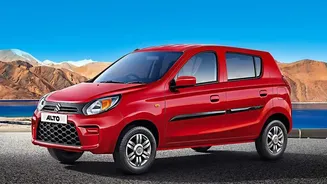
No company is better positioned to capitalize on this shift than Maruti Suzuki, the undisputed king of the small car. With iconic and trusted models like the Alto and S-Presso, Maruti has long been synonymous with entry-level mobility. The tax cut has supercharged their sales performance. The company reported that first-time buyers accounted for 54% of its total sales in the first five months of the fiscal year, a significant jump from 42% in the same period a year prior. This demonstrates how deeply the revival is tied to Maruti's core customer base. While competitors also operate in this space, Maruti's extensive network and brand equity have allowed it to overwhelmingly dominate the renewed demand, solidifying its market leadership even further.
The Return of the First-Time Buyer
The renewed affordability has done more than just boost sales figures; it has reopened the dream of car ownership for many Indian families. For decades, an entry-level Maruti was the quintessential first car, a symbol of upward mobility. In recent years, that dream had become more distant as prices climbed. The GST reduction has put it back within reach. This trend is particularly vital for the motorization of India, broadening the base of vehicle ownership beyond urban centres and into smaller towns. While aspirational buyers continue to flock to feature-packed SUVs, the resurgence of the mini-car segment proves that there is a vast and underserved market for practical, budget-friendly transportation.
Is the Momentum Sustainable?
The question now is whether this surge represents a long-term structural recovery or just a temporary sugar rush from the tax cut. While the growth is impressive, the context is important. The overall market share of entry-level hatchbacks, despite rising, remains small compared to its peak years ago. SUVs continue their relentless march, capturing an ever-larger piece of the passenger vehicle pie. Automakers still face challenges from volatile input costs and rising customer aspirations for more features and space, even in their first vehicle. However, industry executives see this as more than a fleeting trend, believing the broadened market base will fuel sustained growth and encourage further investment in manufacturing capacity.