






The Old Rulebook: Mobility Is Power
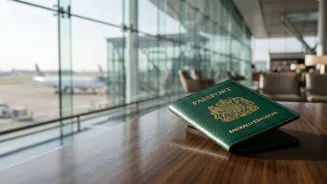
For decades, we have been conditioned to see passport strength as a simple league table. Rankings like the Henley Passport Index became household names by counting the number of destinations a passport holder can access visa-free. This metric, known as global
mobility, was easy to understand and even easier to report. A higher number meant more travel freedom, which was seen as a direct reflection of a nation's diplomatic clout. Countries celebrated climbing the ranks, and travellers used it as a benchmark for their own passport's global standing. The logic was straightforward: more visa-free destinations equals a more 'powerful' passport. But this one-dimensional view deliberately excludes many factors that contribute to a passport's real value.
A New Contender: The 'Happy Passports' Philosophy
Enter the Happy Passports Index 2026, a new ranking by advisory firm Global Citizen Solutions that challenges the old way of thinking. This index argues that the true value of a passport isn't just about where you can go, but also about the quality of life you have at home. It moves beyond the singular focus on mobility to create a more holistic picture of a passport's worth. The Happy Passports Index scores 50 countries on four equally weighted pillars: wellbeing, freedom at home, mobility, and prosperity, health, and safety. This approach means a strong passport isn't just a key to the world, but a reflection of a nation that provides a high quality of life, personal freedoms, and security for its citizens.
Finland Leads, But Not on Mobility Alone
The 2026 rankings reveal some surprising results. Finland leads the index with a score of 93.2 out of 100, followed closely by Iceland and Denmark. While these Nordic nations also hold strong passports in traditional mobility terms, their top placement here is boosted by exceptional scores in wellbeing and freedom. Finland, for instance, topped the World Happiness Report for nine consecutive years, a factor that carries significant weight in this new index. This highlights the index's core finding: the happiest passports belong to countries that successfully combine a good life at home with wide access to the world. Denmark stands out as the most balanced country, ranking in the top four across all four pillars of the index.
When a Strong Passport Isn't Enough
The index also shows that a high mobility score doesn't guarantee a top spot. Singapore, which often leads traditional rankings for its powerful passport, places 10th in the Happy Passports Index. Despite having the best mobility and prosperity scores in the sample, its ranking is held back by lower scores for wellbeing and freedom at home. Similarly, countries like Japan and South Korea, which are travel powerhouses, rank 20th and 26th respectively, scoring higher on mobility than on wellbeing. On the flip side, Costa Rica ranks 13th overall despite having a weaker passport, thanks to its high life evaluation and civil liberties scores. This demonstrates that once a certain level of income and security is met, factors like freedom and life choices become more critical to overall 'passport happiness'.
The Future of Citizenship
The emergence of indices like this, and others that weigh economic access and quality of life, signals a shift in how we perceive the value of citizenship. It's no longer just a travel document but a representation of the opportunities and lifestyle a country provides. For individuals, this broader perspective is crucial when considering everything from travel and work to second citizenship. For nations, it suggests that diplomatic efforts to increase visa-free access are only one part of the equation. True national 'power' in the 21st century may depend just as much on building a society where citizens are happy, free, and prosperous. While mobility remains important, the conversation is expanding to ask a more profound question: what is a passport really worth?