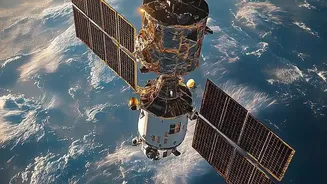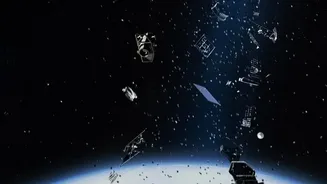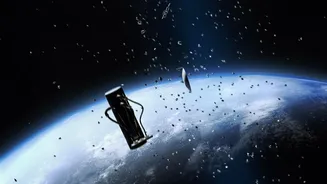




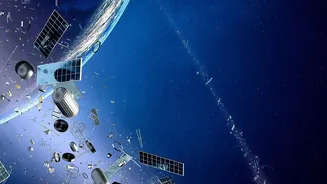
A cosmic junkyard is floating above our heads, threatening the technology that powers our daily lives. As the risk of catastrophic collisions grows, a new multi-billion dollar industry is emerging to clean up our orbital backyard.
A High-Speed Minefield in the Sky
For decades, humanity
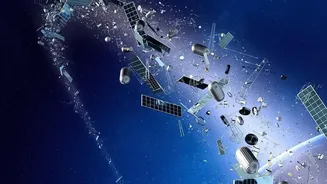
has been launching objects into space, and not all of them have come back down. The result is a vast and growing field of space debris in low Earth orbit (LEO). This isn't just a few stray bolts; it includes over 30,000 tracked objects larger than a softball, such as defunct satellites and spent rocket stages, and hundreds of millions of smaller, untraceable fragments. What makes this junk so dangerous is its incredible speed. Objects in LEO travel at roughly 28,000 km/h, making a collision with even a 1 cm fragment carry the energy of a hand grenade. Experts warn of a scenario called the Kessler Syndrome, where a single collision creates a debris cloud that triggers a chain reaction of more crashes, potentially rendering entire orbits unusable for generations. A 2009 collision between two satellites demonstrated this in practice, creating around 2,000 new pieces of trackable debris.
Finding the Needles in the Haystack
Before you can remove a piece of debris, you have to find it. This is the first pillar of the debris removal market: space situational awareness (SSA), which involves tracking and cataloguing objects. On the ground, powerful radar systems and optical telescopes constantly scan the skies. Companies like LeoLabs and Aldoria specialise in providing this data, creating detailed maps of the orbital environment that help satellite operators avoid collisions. Artificial intelligence is becoming a critical tool, helping to predict debris trajectories with greater accuracy and identify smaller, harder-to-spot fragments. These tracking services are foundational, providing the collision warnings and targeting data that both active satellites and future cleanup crews rely on to navigate the increasingly congested orbital highways.
The Cosmic Cleanup Crew Arrives
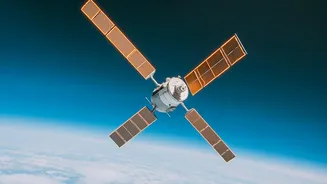
Once a high-risk object is identified, the challenge is how to remove it. This is where the most futuristic and innovative part of the market comes into play: active debris removal (ADR). Companies are developing a range of creative solutions, from nets and harpoons demonstrated by the RemoveDEBRIS mission, to robotic arms and magnetic capture systems. The Swiss company ClearSpace, backed by the European Space Agency (ESA), is developing a mission to capture a piece of a rocket with a giant claw. Meanwhile, Japan's Astroscale has already conducted successful demonstration missions, including the first-ever close inspection of a piece of derelict debris in 2024 with its ADRAS-J spacecraft. While zero pieces of large debris have been fully removed to date, these missions are paving the way for the first captures, which are expected in the coming years.
A Market Fueled by Risk and Regulation
The space debris removal market, valued at over USD 1 billion in 2025, is projected to grow significantly, with some estimates suggesting it could reach nearly USD 6 billion by 2034. This growth is driven by several factors. The explosion of commercial satellite mega-constellations from companies like SpaceX and Amazon is dramatically increasing orbital congestion. At the same time, regulatory bodies are tightening the rules. For example, the U.S. Federal Communications Commission (FCC) now mandates that new satellites in LEO must be deorbited within five years of their mission's end, down from 25 years. This creates a powerful, compliance-driven demand for end-of-life services. For satellite operators and insurers, paying for debris removal is becoming a necessary cost of doing business to protect multi-billion dollar assets and maintain access to space.