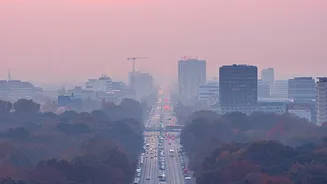








As November's haze settles over Delhi, that familiar scratchy throat has returned for many. The city's air quality has once again dipped into the 'very poor' category, making irritation more than just an annoyance—it's a health warning.
Why Your Throat Hurts
That persistent
dry, scratchy, and painful sensation in your throat is a direct result of the toxic cocktail of pollutants in the air. The smog is dense with microscopic particulate matter (PM2.5 and PM10), sulphur dioxide (SO2), and nitrogen dioxide (NO2) from sources like vehicle exhaust, industrial emissions, and stubble burning. When you breathe, these tiny particles and gases directly irritate the delicate lining of your throat and respiratory tract. This causes inflammation, redness, and dryness, leading to discomfort, a persistent cough, and sometimes a hoarse voice. Your body's immune system reacts to these pollutants as foreign invaders, triggering an inflammatory response that makes the throat feel sore and can increase your susceptibility to infections.
Immediate Relief at Home
For mild irritation, you can find immediate relief with simple home remedies that help soothe the inflamed tissue and clear irritants. Gargling with warm salt water a few times a day is a time-tested method to reduce swelling and flush out pollutants. Drinking plenty of warm fluids, like herbal teas or just warm water, helps keep your throat's mucous membranes hydrated, which is crucial as dry air combined with pollution worsens the scratchy feeling. Traditional Indian preparations like ginger tea, tulsi kadha, and turmeric milk can also provide comfort. Ginger and turmeric contain compounds known for their anti-inflammatory properties. Steam inhalation, with a few drops of eucalyptus oil if desired, can also moisturize the airways and help clear congestion.
Daily Habits to Reduce Exposure
The most effective long term strategy is to minimize your exposure. Start by monitoring the Air Quality Index (AQI) daily. On days when the AQI is 'very poor' or 'severe', it's best to stay indoors as much as possible. Inside your home, create a clean air zone. Keep windows and doors closed, especially during early morning and late evening when pollution levels often peak. Using a high quality air purifier with a HEPA filter in your bedroom and main living areas can significantly reduce indoor PM2.5 levels. Also, consider using a humidifier, as indoor heating and purifiers can dry out the air, which can further irritate your throat. When you return home from outside, it's a good practice to wash your hands and face, and gargle to remove any settled particles.
When You Must Go Outside
Avoiding the outdoors completely is not always practical. When you do need to step out, timing is key. Pollution levels are often lowest in the afternoon, between 3 pm and 5 pm on a sunny day. Avoid morning walks or jogs, as temperature inversion traps pollutants close to the ground, making the air quality at its worst in the early hours. The most critical piece of gear for venturing out is a well fitting mask. Simple cloth or surgical masks are not effective against PM2.5. You need a certified N95 or N99 mask, which can filter out at least 95% of these fine particles. Ensure the mask fits snugly around your nose and mouth with no gaps to provide a proper seal.
Knowing When to See a Doctor
While home remedies can manage mild symptoms, it's important to know when to seek professional medical advice. If your sore throat persists for more than a week or is accompanied by other symptoms, it's time to consult a doctor. Be alert for warning signs that suggest a more serious issue, such as difficulty breathing or shortness of breath, chest tightness or pain, a persistent cough that doesn't go away, wheezing, or a high fever. These symptoms could indicate a more severe respiratory reaction or a secondary infection that requires medical treatment. People with pre existing conditions like asthma or COPD should be especially vigilant and consult their doctor if their symptoms worsen.