



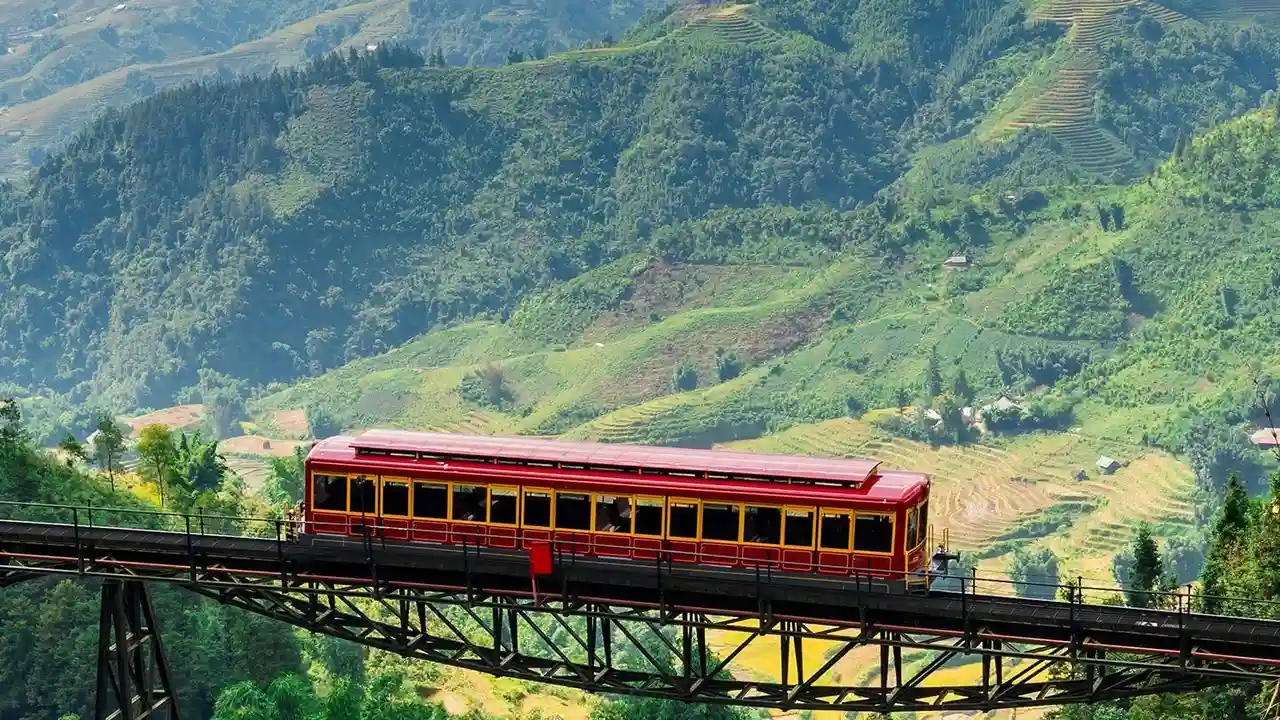
A Railway to the Roof of the Raj
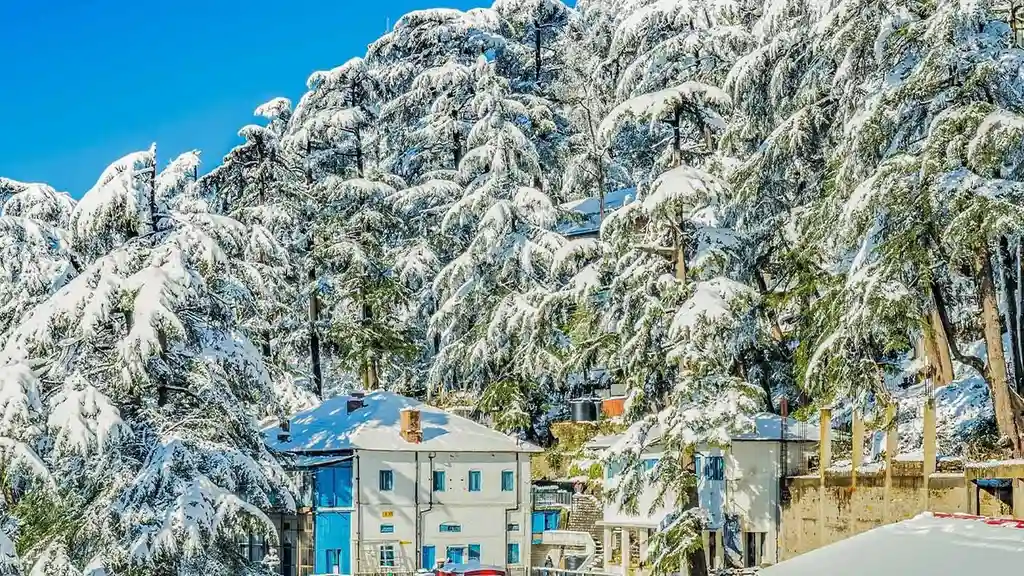
In the late 19th century, Shimla was not just a hill station; it was the summer capital of British India. Each year, the entire colonial administration would relocate from the scorching heat of Calcutta and Delhi to the cool climes of the Himalayan foothills.
This biannual migration, undertaken by horse and ox-drawn carts over treacherous terrain, was a logistical nightmare. The opening of the Delhi-Kalka broad-gauge line in 1891 made the journey easier, but the final, gruelling ascent remained. An idea that had been floated as early as 1847 finally gained critical momentum: a railway line had to be built to connect Shimla to the rest of India, no matter the cost or the challenge.
The Herculean Task of Taming a Mountain
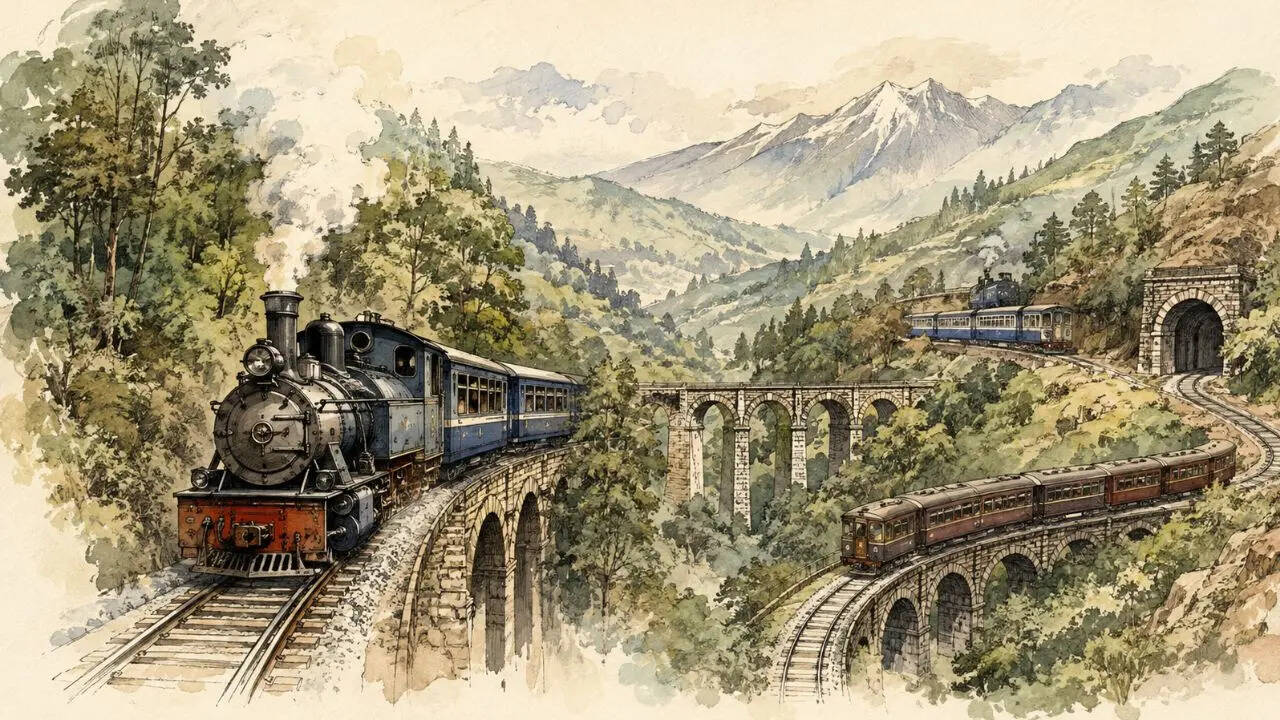
The project, which began in 1898 under Chief Engineer Herbert Septimus Harington, was nothing short of audacious. The plan was to lay a 96-kilometre narrow-gauge track that would climb over 1,400 metres through the rugged Shivalik Hills. This required navigating steep slopes, deep gorges, and unstable mountainsides. The statistics alone are staggering: the line features over 850 bridges and 919 sharp curves. But the true signature of this ambitious undertaking is its tunnels. Originally, 103 tunnels were bored through the mountains, a feat accomplished with limited machinery and immense human effort. These tunnels were not just functional necessities; they were a declaration of intent, proving that no natural obstacle was too great for the era's engineering vision.
The Tragic Tale of Tunnel No. 33
No feature of the railway captures the human drama of its construction more than Tunnel No. 33, the longest on the route at over a kilometre. The story is intrinsically linked to Colonel Barog, an engineer tasked with its construction. His plan was to speed up the process by digging from both ends of the mountain. However, due to a critical miscalculation in alignment, the two ends failed to meet. Publicly humiliated and fined a token sum of one rupee by the authorities for wasting government resources, the disgraced engineer reportedly took his own life near the abandoned tunnel. The station and the new, successful tunnel—completed nearby under H.S. Harington with the help of a local sage, Bhalku—were named in his honour, a sombre memorial to the immense pressure and high stakes involved.
An Enduring Engineering Marvel
When the line finally opened to traffic on November 9, 1903, it was inaugurated by Lord Curzon, the Viceroy of India. It had taken five years and nearly double its initial estimated cost, but the result was a masterpiece. The railway transformed the journey to Shimla from a multi-day ordeal into a comfortable several-hour ride. More than just a convenience, it was hailed as a global engineering triumph. This legacy was formally recognised in 2008 when UNESCO added the Kalka-Shimla Railway to its list of Mountain Railways of India World Heritage Sites. The citation celebrated it as an outstanding example of a technological ensemble that represented the hill passenger railways of the world.