





A Doctor Without Borders
Anil Menon’s path to the stars began on Earth, in some of its most challenging environments. Born in Minneapolis, Minnesota, to an Indian father from Kerala and a Ukrainian mother, his career has been defined by service in extreme conditions. An emergency
medicine physician by training, Menon has responded to humanitarian crises globally, including the 2010 earthquake in Haiti and the 2015 earthquake in Nepal. He served as a flight surgeon in the U.S. Air Force, deploying to Afghanistan and treating wounded soldiers. His experience extends to high-altitude medicine, having volunteered with the Himalayan Rescue Association to care for climbers on Mount Everest. This diverse and demanding background, which also includes a year in India supporting polio vaccination initiatives, forged a unique specialist uniquely prepared for the challenges of keeping humans healthy far from home.
Pioneering Commercial Spaceflight Medicine
Before joining NASA’s elite astronaut corps, Menon made history in the private sector. In 2018, he became the first-ever flight surgeon at SpaceX. In this role, he was instrumental in building the company's medical program from the ground up, creating the systems necessary to support human life on commercial spacecraft. He was the lead flight surgeon for landmark missions, including Demo-2, which sent the first NASA astronauts to the International Space Station (ISS) on a commercial vehicle, and Inspiration4, the world's first all-civilian orbital mission. His work at SpaceX was crucial in proving that commercial entities could safely and reliably fly humans to space, laying the groundwork for a new era of space travel and making him a key figure in modern space history.
The Final Frontier of Healthcare
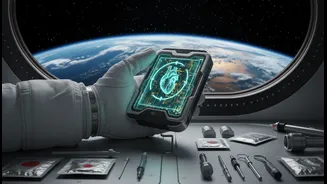
Menon’s expertise is now focused on solving one of the greatest challenges for deep-space exploration: the human body. As a NASA astronaut, his work is pivotal to understanding and mitigating the health risks of long-duration spaceflight. Beyond Earth’s protective magnetic field, astronauts face a barrage of challenges, including radiation exposure, bone density loss, muscle atrophy, and vision problems caused by fluid shifts in the body. On a multi-year mission to Mars, there is no option for a quick return or resupply. Part of Menon's mission on the ISS involves testing technologies that could one day allow crews to produce their own intravenous fluids from potable water and using augmented reality to guide medical procedures, reducing reliance on Earth. His research is a critical step towards making humanity a multi-planetary species.
The Astronaut for the Artemis Generation
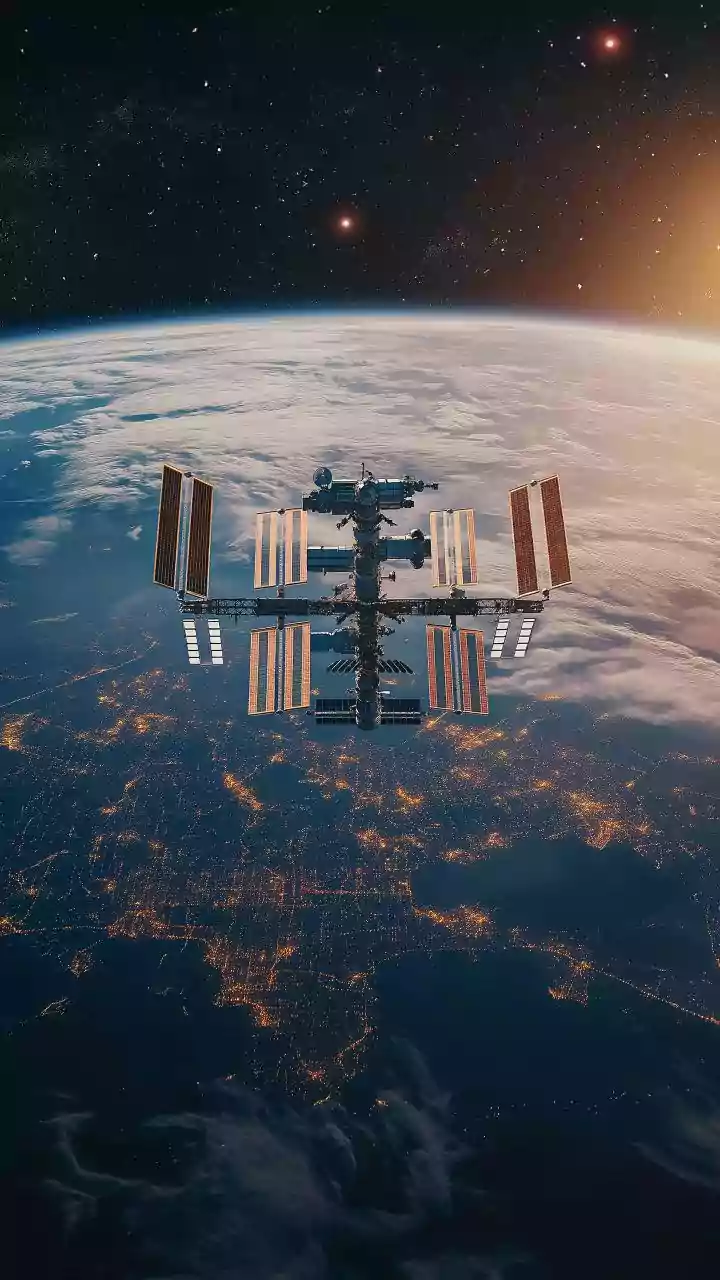
Selected as a NASA astronaut in 2021 from a pool of over 12,000 applicants, Menon represents the future of space exploration. His training has prepared him for missions to the ISS and potentially for future lunar missions under the Artemis program. His current eight-month mission aboard the ISS, which began in July 2026, is a testament to his journey from being the doctor who supported astronauts to becoming one himself. His work is not just about keeping the current crew healthy; it's about developing the protocols, technologies, and medical knowledge that will be essential for the first human footsteps on Mars. His wife, Anna Menon, is also an astronaut who flew on the private Polaris Dawn mission, making them one of the few astronaut couples pushing the boundaries of spaceflight together.