






The Two 'Cinnamons' in Your Pantry
That familiar spice jar labelled 'cinnamon' most likely contains cassia. It's the common, affordable variety used widely across the globe. Cassia comes from the bark of the Cinnamomum cassia tree, primarily grown in Southeast Asia. The other variety is
Ceylon cinnamon, often called 'true cinnamon', which comes from the Cinnamomum verum tree, native to Sri Lanka and Southern India. While they share a name and a place in the spice rack, they are quite different in appearance, flavour, and even in their chemical makeup.
A Visual Guide: Darker Colour and Thicker Form
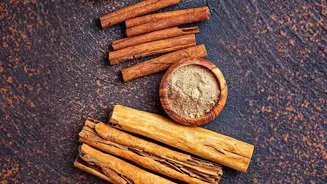
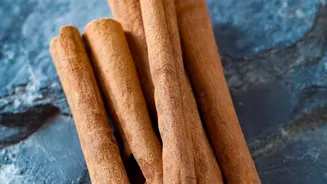
The easiest way to tell the two apart is by looking at the whole sticks. Cassia bark is exactly as the headline suggests: darker, harder, and thicker. It has a distinct dark, reddish-brown colour. Each stick is composed of a single, thick layer of bark that curls inward from both sides as it dries, forming a hollow, scroll-like tube. In stark contrast, Ceylon cinnamon is a lighter tan-brown colour. Its sticks are made of many thin, fragile layers of bark that are rolled together tightly, resembling a cigar. This layered structure makes Ceylon cinnamon sticks much more delicate and papery.
The Feel Test: Hard and Woody vs. Soft and Crumbly
Texture is another key giveaway. Cassia bark is notoriously hard and woody. Trying to break a cassia stick with your hands is difficult, and it will snap cleanly if you manage it. This robustness makes it suitable for long-simmering dishes where you want to infuse flavour without the stick breaking apart. Ceylon cinnamon, on the other hand, is soft, brittle, and crumbly. You can easily break it apart with your fingers, and it will splinter into fine, papery pieces. This fragility also means it grinds into a fine powder much more easily than the tough cassia.
From Sticks to Powder: The Ground Dilemma
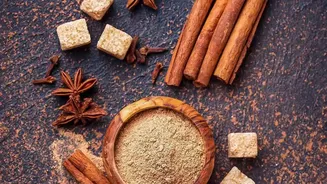
Identifying the spice in its ground form is more challenging, but not impossible. Ground cassia retains its darker, reddish-brown hue, while ground Ceylon is a lighter tan colour. However, the best clue is often the label and the price. If the package simply says 'cinnamon', it is almost always the cheaper cassia variety. Products containing 'true cinnamon' will be explicitly labelled as 'Ceylon cinnamon' and typically command a higher price due to the more labour-intensive harvesting process.
A Matter of Taste and Aroma
The differences extend to flavour and scent. Cassia has a strong, pungent, and spicy-sweet flavour that is less nuanced and can even have a slightly bitter edge. This bold profile comes from a high concentration of the essential oil cinnamaldehyde. It’s the powerful cinnamon flavour many are used to in robust baked goods. Ceylon cinnamon offers a more delicate and complex experience. Its flavour is subtly sweet with floral and citrus notes, making it ideal for desserts and dishes where you want a refined, rather than overpowering, spice flavour.
Why Does the Difference Matter?
Beyond culinary preference, there is a health consideration. Cassia contains significantly higher levels of a compound called coumarin. While naturally occurring, high intake of coumarin can be harmful to the liver. Ceylon cinnamon contains only trace amounts, making it a safer choice for those who consume cinnamon regularly or in large quantities. For occasional use, the coumarin in cassia is generally not a concern for most people, but for daily use, such as in supplements or smoothies, switching to Ceylon is often recommended.