









The AI Gold Rush and Its Demands
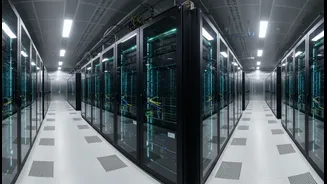
Canada is witnessing a surge in proposals for hyperscale data centres, the enormous digital factories that power everything from social media to cutting-edge AI. This boom presents a massive economic opportunity, with billions in potential investment.
However, these facilities are incredibly thirsty for two critical resources: electricity and water. The energy needed to run and cool racks of powerful servers can strain provincial power grids, while the water required for traditional cooling systems can run into billions of litres annually. As AI models become more complex, their energy and water footprints are growing exponentially, forcing governments to confront a difficult question: how do you attract high-tech investment without overwhelming public utilities and environmental resources?
What Is Meta Proposing in Alberta?
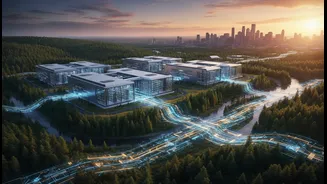
Meta is building its first-ever Canadian data centre in Sturgeon County, Alberta, a project with a staggering C$13 billion investment. This facility is designed to support the company's global AI ambitions and will be its largest outside of the United States. What makes this project a potential game-changer isn't just its size, but its approach to infrastructure. Instead of simply plugging into the existing grid, Meta is taking a different route. Alberta's provincial policy now prioritizes data centre projects that secure their own power generation to avoid straining the public grid. In line with this, Meta is fully funding the new generation and transmission infrastructure needed to power its 1-gigawatt campus.
A New Model for Energy and Water
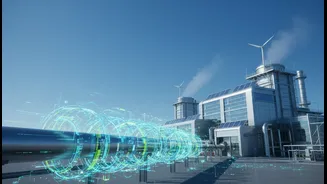
Meta's project involves a long-term agreement with a consortium that is building a new natural gas-fired power plant to supply the data centre. While the use of natural gas has drawn some scrutiny, Meta has stated the facility will match its electricity consumption with 100% renewable and clean energy sources, and it is funding upgrades to improve resilience across the wider grid. On the water front, the facility is designed to be exceptionally efficient. It will use a closed-loop liquid cooling system combined with dry cooling technology, which dramatically reduces water consumption. Meta has stated that water use on-site will be limited to domestic purposes and maintenance, a significant departure from traditional data centres that can consume vast amounts of water for cooling.
The Ripple Effect on Canadian Policy
This self-sufficient model is exactly what Canadian officials, particularly in provinces like Alberta, want to see. By requiring large industrial users to fund their own power solutions, the government can attract investment without passing on the infrastructure costs to existing residents and businesses. Meta's proposal essentially creates a new benchmark. Future tech companies looking to build data centres in Canada will likely face similar expectations. Regulators can now point to the Sturgeon County project as proof that it's possible for a hyperscale facility to be built without burdening the public grid or using excessive amounts of local water. This could lead to evaluation criteria for all new server farm proposals becoming stricter, demanding detailed plans for independent power generation and advanced, water-saving cooling technologies.
Challenges and the Road Ahead
While Meta's approach is being hailed as a new standard, it's not without challenges or questions. The reliance on a new natural-gas plant, even with commitments to match consumption with renewables, raises questions about long-term emissions. Furthermore, the sheer scale of such projects means that even with efficient designs, the aggregate demand for resources remains immense. However, the precedent has been set. By internalizing the costs of its massive energy and water needs, Meta has fundamentally altered the conversation around data centre development in Canada. The era of plugging into the public grid without a comprehensive plan for resource management appears to be ending.