




The Invisible Damage You Can't Feel
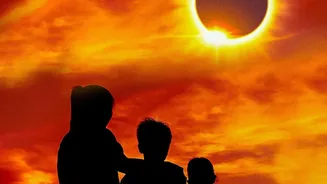
Staring at the sun, even for a few seconds, can cause a condition called solar retinopathy. Intense visible light, along with invisible ultraviolet (UV) and infrared (IR) radiation, floods the retina. This can damage the light-sensitive cells, essentially
creating a burn on the part of your eye responsible for sharp, central vision. The most frightening part is that your retina has no pain receptors, so you won't feel the damage as it happens. Symptoms, which can include blind spots, distorted vision, and eye pain, may not appear for hours or even days. In some cases, the vision loss is permanent.
The Rogues' Gallery of Unsafe 'Filters'
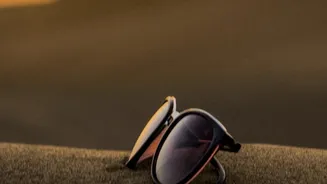
Many common household items seem dark enough, but they offer a false sense of security. They might dim the sun's brightness, but they fail to block the dangerous UV and IR radiation. Here are some of the worst offenders: Sunglasses: No matter how dark or expensive, even multiple stacked pairs of sunglasses are not safe. They don't block nearly enough light. Certified solar viewers are thousands of times darker than typical sunglasses. Smoked Glass: This old-fashioned method is incredibly dangerous. It's difficult to get a uniform coating of soot, and the layer is fragile and easily smudged, creating unsafe thin spots. CDs, DVDs, and Food Packaging: The metallic layer on a disc or inside a crisp packet might seem reflective, but it's full of inconsistencies and does not filter uniformly. It allows dangerous levels of infrared radiation to pass through. Photographic Film or X-rays: Exposed or undeveloped film and X-rays are also completely unsafe for solar viewing.
The Gold Standard: What ISO 12312-2 Means
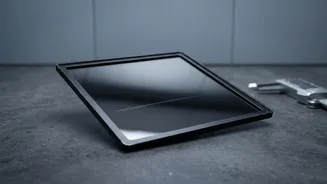
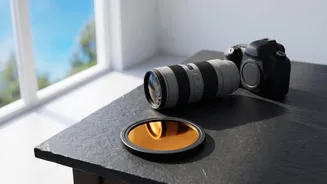
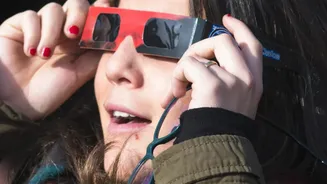
The only way to be sure your eyes are protected is to use a special-purpose solar filter that meets the international safety standard, ISO 12312-2. This isn't just a recommendation; it's a rigorous specification that dictates how much visible light, UV, and IR radiation can pass through the filter. To comply, a filter must block 99.999% of intense visible light and 100% of harmful UV and IR rays. This ensures the sun appears as a comfortable, dim disc, often in a pale yellow or white, without frying your retinas.
How to Find and Verify Safe Viewers
With the rise of online marketplaces, counterfeit eclipse glasses have become a serious problem. A fake pair might have the ISO logo but provide none of the protection. The safest bet is to buy from reputable vendors. The American Astronomical Society (AAS) maintains a list of approved manufacturers and sellers on its website. Before using any viewer, inspect it carefully. If the lenses are scratched, punctured, torn, or pulling away from the frame, discard it. When you put them on indoors, you shouldn't be able to see anything except for very bright lights.
Safe Viewing Without Special Glasses
If you don't have certified eclipse glasses, you can still enjoy the show safely with indirect viewing methods. The simplest is a pinhole projector. Punch a small hole in a piece of card, and with your back to the sun, let the light pass through the hole onto another surface, like a second piece of card or the ground. You'll see a projected image of the sun, and you can watch the eclipse progress without ever looking at the sky. A kitchen colander or even the gaps between leaves on a tree can create a similar effect, projecting multiple crescent suns onto the ground. Just remember: you look at the projection, never through the hole itself.