





An Increasingly Crowded Sky
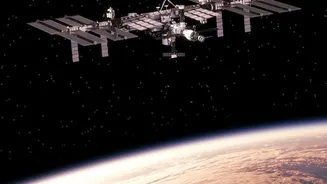
Low Earth Orbit (LEO), the orbital highway where most satellites operate, is facing a severe traffic problem. As of late 2023, the number of operational satellites had surged to nearly 9,700, a 361% increase over the previous five years. This explosion
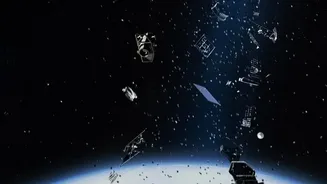
is largely driven by the deployment of 'mega-constellations' by companies providing global internet services. With tens of thousands of new satellites planned, the problem is set to worsen. Alongside these active satellites are spent rocket stages, defunct spacecraft, and millions of fragments from past collisions and explosions, collectively known as space debris. These objects travel at speeds exceeding 17,000 mph, where even a small fleck of paint can inflict catastrophic damage on an operational satellite. This environment of growing congestion significantly elevates the risk of collisions, which not only destroys valuable assets but also creates even more debris in a cascading effect.
The Rise of the Space Janitors
For decades, space debris was a problem everyone acknowledged but no one had a commercial incentive to solve. That is finally changing. A new market for space debris monitoring and removal is taking shape, valued at over USD 1.2 billion in 2026 and projected to grow steadily. While the majority of current revenue comes from monitoring and tracking services provided by firms like LeoLabs, the active debris removal (ADR) segment is where the most significant future growth is expected. A new generation of startups is emerging to tackle the clean-up job. Companies like Japan's Astroscale and Switzerland's ClearSpace are pioneering technologies to capture and de-orbit large, high-risk pieces of junk. These 'space janitors' are moving from demonstration missions to what they hope will be a routine service, essential for the long-term health of the space economy.
Nets, Harpoons, and Robotic Arms
Removing an object that is not designed to be captured while traveling at orbital speeds is a monumental technical challenge. Companies are developing a range of creative solutions. Astroscale has been a commercial leader, successfully demonstrating missions to inspect and prepare for the capture of debris. Its ADRAS-J mission, for example, completed close-proximity operations with a derelict rocket stage in 2026. ClearSpace has a contract with the European Space Agency (ESA) for the world's first mission to remove an existing piece of debris, using a large four-armed claw to grab and dispose of a leftover rocket adapter. Other proposed technologies include giant nets, harpoons, and advanced robotics to perform on-orbit servicing and repairs, which can prevent satellites from becoming debris in the first place. The goal is to develop reliable, scalable, and eventually, cost-effective methods for cleaning up the most dangerous orbital highways.
The Billion-Dollar Question: Who Pays?
Despite the technological progress, the business model for debris removal remains the industry's biggest hurdle. Who is responsible for legacy debris, and who should pay for its removal? Today, a single removal mission can cost tens of millions of dollars. This has led the market to focus first on prevention and compliance. New regulations are a key driver. The U.S. Federal Communications Commission (FCC) now mandates that satellites launched after September 2024 must be de-orbited within five years of their mission's end, a dramatic reduction from the previous 25-year guideline. Because this rule applies to any company wanting access to the U.S. market, it has become a de facto international standard. Similarly, the European Space Agency's 'Zero Debris Charter' aims for a debris-neutral future by 2030, pushing operators to take responsibility for their hardware from launch to disposal. These rules create a clear commercial demand for end-of-life services, providing the initial economic foundation for the growing removal market.