








The Government's Grand AI Plan
India is laying the groundwork for a massive expansion of its artificial intelligence capabilities, and the government is putting serious money on the table to make it happen. Central to this strategy is the IndiaAI Mission, a flagship programme approved
in March 2024 with an outlay of over ₹10,371 crore. The mission's goal is to establish a robust AI ecosystem, with a significant focus on building out the nation's computing infrastructure. Just recently, Finance Minister Nirmala Sitharaman identified AI, semiconductors, and quantum technology as the next major frontier for infrastructure investment in the country. This involves not only direct funding but also creating policies that encourage public-private partnerships to build everything from high-performance GPU clusters to specialized data centres. In a recent proposal, the government is even exploring a ₹15,000–20,000 crore anchor investment for a National Frontier AI & Compute Fund (NFAICF) to provide long-term risk capital.
What 'Anchor Investment' Means Here
In the world of IPOs, an anchor investor is a large, credible institution that buys a significant stake before the offering opens to the public. Their participation signals confidence in the venture, which in turn attracts smaller, more risk-averse investors. The government is essentially adopting this role for the entire AI infrastructure sector. By committing public funds upfront through initiatives like the IndiaAI Mission, it sends a powerful message to the private market: this is a strategic national priority with long-term backing. This public capital helps absorb the initial high costs and uncertainties associated with building capital-intensive projects like data centres and semiconductor fabs. This initial investment de-risks the opportunity for corporations and venture capitalists, making them more comfortable committing their own funds. Studies on government venture capital have shown that private funds often follow public investment, viewing it as a positive signal.
The 'Crowding In' Effect
The ultimate goal of this anchor investment is to trigger a 'crowding in' effect. This is the opposite of 'crowding out', where large government borrowing monopolises available capital. Instead, strategic public spending can stimulate, or 'crowd in', private investment that might not have happened otherwise. Public R&D and infrastructure spending create new knowledge and foundational assets that the private sector can then build upon to create commercial products and services. In the context of AI, the government is funding the development of shared GPU clusters and making high-quality datasets available, which lowers the barrier to entry for startups and researchers. This creates a more vibrant and competitive ecosystem, attracting private capital that seeks to fund application-layer companies and innovative new models. The hope is that the government’s ₹10,372 crore for the IndiaAI Mission will unlock a much larger wave of private funding, similar to how major Indian corporations have already pledged billions for AI infrastructure.
Building the Backbone of Indian AI
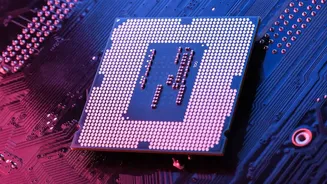
The infrastructure at the heart of this push is formidable. It includes establishing over 38,000 GPUs through public-private partnerships, creating AI-specific data centres, and fostering a domestic semiconductor industry through the Semicon India Programme. The ambition is to create sovereign AI capabilities, reducing reliance on foreign technology and making high-performance computing accessible and affordable for Indian innovators. This focus on the foundational layer—the hardware and compute power—is critical because the cost of training advanced AI models is a significant barrier for many startups. By subsidising access to this infrastructure, the government enables a wider range of companies to experiment and build India-specific AI solutions, from healthcare to agriculture.
Will It Be Enough?
While the strategy is sound, challenges remain. The Indian AI startup ecosystem still faces a significant funding gap compared to global counterparts in the US and China. In 2025, Indian AI startups raised only a fraction of the capital that flowed into American firms. Reports have also highlighted that the IndiaAI Mission has struggled with execution, missing some of its targets and facing budget cuts. For the 'crowding in' effect to fully materialise, private investors need to see not just a policy vision but consistent and effective implementation. The government's anchor investment is a crucial first step, but its success will depend on creating a predictable regulatory environment and demonstrating tangible progress that gives private capital the confidence to make long-term bets on India's AI future.