



What Exactly Happened?
During its 15th test flight, the Starship system launched from Starbase, Texas. The mission had two key objectives: deploy a batch of Starlink satellites and attempt to recover both the Super Heavy booster and the Starship upper stage. After successfully
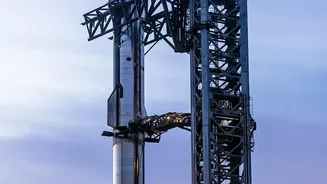
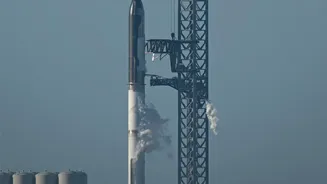
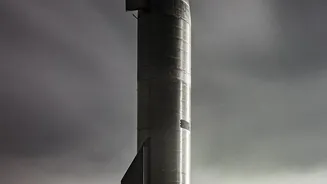
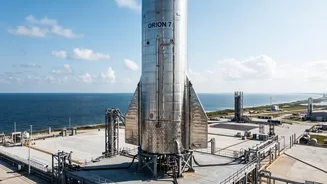
propelling the upper stage, the Super Heavy booster attempted its return but experienced a low-fuel alarm, forcing it to divert for a splashdown in the Gulf of Mexico. However, the main event followed. The Starship upper stage, named Ship 42, completed 14 orbits of Earth over nearly 22.5 hours. It then performed a deorbit burn, plummeted through the atmosphere in a 'belly flop' position to scrub speed, flipped upright, and ignited its engines for a controlled descent. It precisely navigated between the launch tower's arms, which closed around it, successfully recovering the vehicle.
The 'Chopsticks' Explained
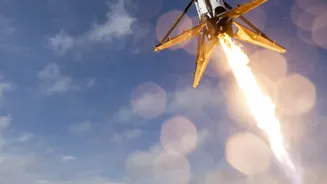
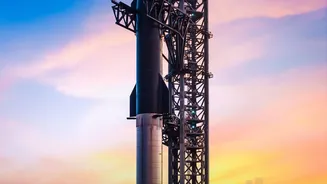
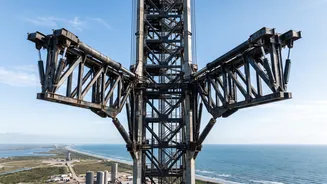
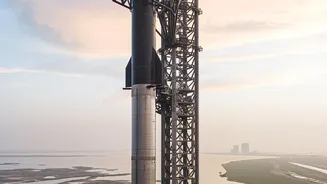
The system at the heart of this achievement is the launch tower itself, nicknamed 'Mechazilla'. The key components are two massive, hydraulically-actuated arms often called the 'chopsticks'. These arms are designed to both stack the massive rocket before launch and catch its returning stages. Instead of adding the extra weight of landing legs to the booster and ship—a mass penalty that reduces payload capacity—SpaceX opted to build the landing gear into the ground infrastructure. Using a suite of advanced sensors and real-time control systems, the tower tracks the descending rocket with incredible precision, positioning the arms to securely grab the vehicle at specific catch points just below its fins. This catch method is designed to enable much faster inspection and turnaround for the next flight.
Why the Catch Is a Game-Changer
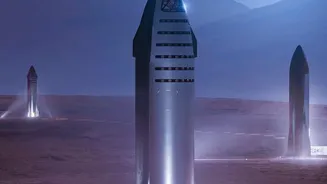
This successful recovery is what SpaceX commentator Dan Huot called the 'holy grail of spaceflight'. Until now, while SpaceX has masterfully reused its Falcon 9 boosters, the upper stages of orbital rockets are typically discarded after a single use. Catching the Starship upper stage is the crucial missing piece for a fully and rapidly reusable launch system. Full reusability is the core of SpaceX's business model for Starship, as it drastically reduces the cost per launch. Instead of throwing away an expensive and complex spacecraft after every mission, SpaceX aims to catch it, perform minimal checks, refuel, and fly it again in a short period. This achievement moves the company from demonstrating booster recovery to proving the entire system can be brought back, paving the way for lower costs and a higher launch frequency.
What Comes Next for Starship?
While a monumental success, Flight 15 was a partial victory. The next major hurdle is to successfully catch both the Super Heavy booster and the Starship upper stage in a single mission. SpaceX has caught the booster on three previous occasions, but an engine underperformance issue led to the abort during this flight. The company will investigate the booster issue while preparing for the next flight. Proving the consistency of the catch maneuver for both stages is essential. From there, the focus will shift to 'rapid' reusability—reducing the refurbishment time between flights from months to weeks, and eventually days. Achieving this will be key to unlocking Starship's potential for deploying thousands more Starlink satellites and supporting NASA's Artemis program, which plans to use a modified Starship to land astronauts on the Moon.