






Volkswagen's 'Survival' Plan
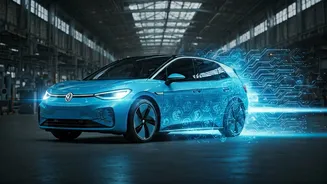
Volkswagen is bracing for what its own CEO calls a fight for survival. The company is considering its most extensive restructuring ever, which could involve shedding nearly a sixth of its global workforce and closing four key plants in Germany. This drastic
proposal aims to slash costs and reduce planned investments as the company confronts falling profits and a sliding share price. The goal is to save billions and make the company leaner and more competitive, but it comes at a huge potential cost to its workforce and German manufacturing base. These moves are a direct response to a confluence of crises: weakening sales, high costs, and intense competitive pressure.
The Real Cost of Going Electric
The transition to electric vehicles (EVs), once seen as a straightforward path to the future, has proven to be incredibly difficult and expensive for legacy automakers. While car companies are pouring billions into developing new EV models and retooling factories, the returns have been slow. The process involves a complete overhaul of supply chains, manufacturing processes, and worker skills. For a company like Volkswagen, this means balancing its legacy internal combustion engine (ICE) business with the urgent need to build a profitable EV division from the ground up—a balancing act that has strained finances and created internal conflict. The high cost of batteries and development means EVs are often sold at a lower margin or even a loss initially, putting immense pressure on profitability.
The Dragon in the Room: China's Dominance
Perhaps the single greatest pressure point is the meteoric rise of Chinese EV brands. Companies like BYD have not only overtaken VW in the crucial Chinese market but are now aggressively expanding into Europe. Chinese automakers benefit from strong government support, a dominant position in the battery supply chain, and a much faster development cycle, allowing them to bring new, tech-forward models to market in 18-24 months, compared to the 5-7 years it takes traditional manufacturers. Their vehicles are often 25-30% cheaper than European counterparts while offering comparable or even superior technology and software, a combination that legacy brands are struggling to compete with.
An Industry-Wide Dilemma
Volkswagen is not alone. The entire automotive industry is navigating a period of profound disruption. After years of reliable growth, the market is now defined by flat sales volumes, geopolitical trade tensions, and the high capital demands of electrification. Traditional automakers in Europe, the US, and Japan are all facing the same challenges: how to fund the expensive EV transition while their profitable ICE sales are under threat. They are being squeezed from two sides: nimble EV startups like Tesla and cost-effective Chinese giants. This has created what some analysts call one of the toughest competitive landscapes in a decade, where simply surviving, let alone thriving, requires painful and fundamental change.