





The Peak Power Puzzle
Every evening, as millions of households switch on their lights, air conditioners, and appliances, India’s power grid faces its toughest test. This surge in demand, known as peak load, typically occurs after sunset, just when traditional solar power generation
ceases. For years, the gap has been filled by fossil-fuel-based power plants, which can be ramped up quickly. However, as India pushes towards a greener energy future, relying on polluting sources is not a sustainable solution. The challenge is to find a clean, reliable source of power that can work even when the sun isn't shining. This is where the synergy of floating solar and energy storage comes into play, offering a way to harness the sun's energy and deploy it when it is needed most.
What Are Floating Solar Panels?
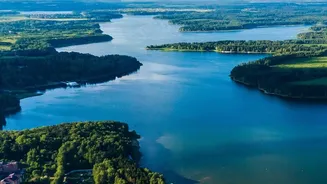
Floating solar farms, also known as 'floatovoltaics', are exactly what they sound like: solar photovoltaic (PV) panels mounted on buoyant structures that float on the surface of water bodies like reservoirs, lakes, and dams. This approach cleverly sidesteps one of the biggest hurdles for large-scale solar projects in a densely populated country like India: land scarcity. Instead of competing for valuable agricultural or forest land, these projects repurpose unused water surfaces. Furthermore, floatovoltaics have a key advantage over their land-based counterparts. The water underneath the panels provides a natural cooling effect, which can boost their electricity generation efficiency by as much as 10-15%. The panels, in turn, shade the water, reducing evaporation and helping to conserve precious water resources—a significant benefit in drought-prone areas.
The Missing Piece: Energy Storage
Solar panels can only generate power during the day, which doesn't solve the evening peak demand problem on its own. This is where Battery Energy Storage Systems (BESS) become crucial. These large-scale battery systems function like a massive power bank. During the day, when solar generation is at its peak, any excess electricity that isn't immediately consumed by the grid is used to charge the batteries. This stored energy can then be discharged back into the grid during the evening hours or on cloudy days, providing a stable and reliable power supply long after the sun has set. By pairing generation with storage, intermittent renewable sources like solar are transformed into a dispatchable asset, capable of delivering power on demand.
A Powerful Partnership
When floating solar farms are co-located with battery storage, they create a powerful, hybrid energy system capable of delivering round-the-clock clean power. Placing these systems on reservoirs of existing hydroelectric plants is particularly synergistic. The combined system can use the existing transmission infrastructure, reducing costs. During the day, solar power dominates. In the evening, the stored battery power is released. Finally, the hydropower can be used to fill any remaining gaps, creating a smooth and continuous supply of electricity. This integrated approach not only enhances grid stability but also maximizes the use of existing infrastructure, making the entire system more efficient and cost-effective.
India's Floatovoltaic Future
India is actively embracing this technology. The government recently approved the Pradhan Mantri Surya Sarovar Yojana, a scheme aimed at deploying 5,000 MW of floating solar capacity, with each project required to have an accompanying energy storage system. Major projects are already underway, such as the massive Omkareshwar floating solar park on the Narmada river in Madhya Pradesh. A recent national assessment estimated that India's reservoirs have the potential to host a massive 102 GW of floating solar capacity. While India's current installed capacity is still a small fraction of this potential, these new policies are expected to attract significant investment and spur rapid growth in the sector.
Hurdles on the Horizon
Despite the immense potential, the path forward has its challenges. The initial installation cost of floating solar projects can be higher than land-based systems, partly due to the expense of the floating platforms and specialized mooring systems. Designing and maintaining these systems requires specialized expertise to handle variables like changing water levels, wind, and wave action. There are also environmental considerations; while the systems can reduce algae growth, their long-term impact on aquatic ecosystems needs careful study and management to ensure they do not harm underwater life. However, as the technology matures and manufacturing scales up, costs are expected to decline, making it an increasingly competitive energy solution for India's future.