



1. Jasmine (Mogra)
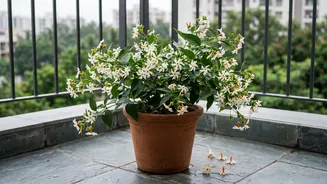
No Indian garden feels complete without the iconic fragrance of Mogra (Jasminum sambac). This compact shrub releases a sweet, intoxicating scent that intensifies in the evening, making it perfect for placing near a window or seating area. Mogra thrives
in pots and requires at least five to six hours of direct sunlight to produce its beautiful white blooms. Use a well-draining soil mix, and water when the top inch of soil feels dry. Regular pruning after a flowering cycle encourages bushier growth and more flowers.
2. Night-Blooming Jasmine (Raat ki Rani)
True to its name, Raat ki Rani (Cestrum nocturnum) is a nocturnal wonder, releasing a powerful and pervasive fragrance only after sunset. A single plant can perfume an entire balcony. This hardy shrub is easy to care for and does well in containers, though it requires regular pruning to maintain its shape. It loves a sunny spot, needing about six hours of sunlight for abundant flowering. Keep the soil consistently moist but not waterlogged, reducing watering in the winter months.
3. Tuberose (Rajnigandha)
Known for its tall spikes of waxy, white flowers, Rajnigandha (Polianthes tuberosa) offers a complex and luxurious fragrance that is a favourite in perfumes. It is a bulbous plant, making it an excellent candidate for container gardening. Plant the bulbs in spring in well-draining soil and place the pot in a location that receives full sun for at least six hours a day. The flowers typically bloom about three to four months after planting, filling late summer and monsoon evenings with their signature scent.
4. Gardenia (Gandharaj)
With creamy, rose-like white flowers and glossy dark green leaves, the Gandharaj or Gardenia is as beautiful as it is fragrant. Its rich, sweet scent can make any small space feel like a luxurious retreat. Gardenias can be grown in large pots but are slightly more demanding. They require acidic, well-draining soil and a spot that receives bright, indirect sunlight, especially avoiding the harsh afternoon sun. Consistent moisture is key, so don't let the soil dry out completely.
5. Frangipani (Champa)
The sweet, tropical scent of Champa (Plumeria) evokes feelings of a serene getaway. While many associate it with large trees, dwarf varieties like the Plumeria 'Singapore Dwarf' are perfect for growing in large pots on a balcony or terrace. These compact versions remain bushy and manageable, producing beautiful flowers with the same beloved fragrance. Champa requires at least six hours of full sunlight and well-draining soil. It's relatively low-maintenance but be careful not to overwater, as this can cause root rot.
6. Night-flowering Jasmine (Parijat)
The Parijat (Nyctanthes arbor-tristis) holds a special place in Indian culture and mythology. This small tree or shrub produces delicate white flowers with vibrant orange stems that bloom at night and fall to the ground at dawn, creating a fragrant carpet. The scent is sweet and calming. Parijat can be grown and maintained in a large pot, making it suitable for balconies. It thrives in a spot with 4-6 hours of sunlight and prefers well-drained soil and moderate watering.
7. Sweet Alyssum
For a more delicate, honey-like fragrance, Sweet Alyssum is an excellent choice. This low-growing plant produces dense clusters of tiny white, pink, or purple flowers, making it a beautiful 'spiller' plant for the edges of containers or in hanging baskets. It blooms best in full sun but appreciates some partial shade in hotter climates. While it requires regular watering to keep the soil moist, its trailing habit and sweet scent make it a charming addition to any small-space garden.
8. Lavender
While more common in cooler climates, lavender can be successfully grown in Indian balconies with the right care. Its famous calming scent and beautiful purple spikes offer a different kind of aromatic experience. Choose a terracotta pot for excellent drainage, as lavender hates having wet roots. It needs at least 6-8 hours of full, direct sun and should be planted in a gritty, fast-draining soil mix. Growing lavender can be challenging in humid areas, but with careful watering and maximum sun exposure, it's a rewarding plant to cultivate.