




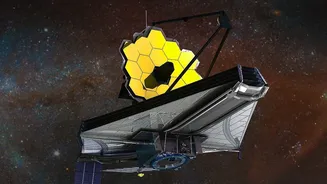
A New Class of Cosmic Explorer
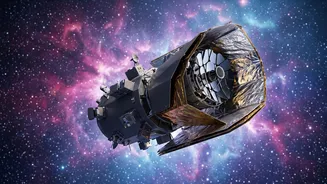
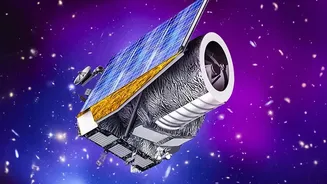
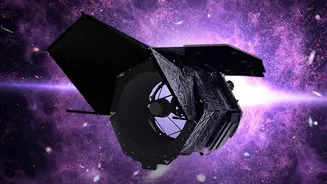
PRIMA, which stands for the PRobe far-Infrared Mission for Astrophysics, is the first mission selected for a new category of NASA projects called Probe Explorers. This new class was created to fill a strategic gap between the agency's smaller, highly
focused missions and its massive, multi-billion-dollar flagship observatories like the James Webb Space Telescope (JWST). Recommended by the National Academies' 2020 Decadal Survey, these Probe-class missions are capped at around $1.2 billion, allowing NASA to tackle high-priority science without the immense budget of a flagship. PRIMA represents the first of this new, ambitious middle-tier of cosmic exploration, continuing a legacy that began with the first Explorer satellite in 1958.
Why We Need Far-Infrared Vision
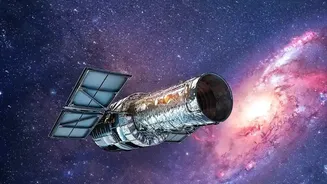
While telescopes like Hubble see visible light and JWST specializes in near- and mid-infrared, PRIMA is designed to see a different part of the spectrum: far-infrared light. This is crucial because many of the universe's most interesting processes are hidden from other telescopes. Far-infrared allows astronomers to peer through thick clouds of cosmic dust that obscure the birth of stars and planets. It also lets them see objects that are too cold to shine brightly in visible or even near-infrared light. PRIMA will bridge the observational gap between missions like JWST and ground-based radio telescopes, providing a more complete picture of cosmic events. To achieve this, its 1.8-meter telescope and its advanced detectors will be cryogenically cooled to just a few degrees above absolute zero, making it orders of magnitude more sensitive than previous far-infrared missions like the Herschel and Spitzer space telescopes.
Uncovering the Secrets of Planet Formation
One of PRIMA's primary goals is to understand how planets, including potentially life-bearing ones, come into existence. It will study protoplanetary disks, the vast rings of gas and dust that swirl around young stars. Specifically, PRIMA will be able to measure the amount and location of water within these disks—a key ingredient for life as we know it. This is a task that even the mighty JWST cannot perform, as the specific signatures of water vapor are only visible in the far-infrared wavelengths that PRIMA will observe. By mapping the raw materials of planet formation, scientists hope to answer fundamental questions about where and how planets form.
Tracing the Growth of Galaxies and Black Holes
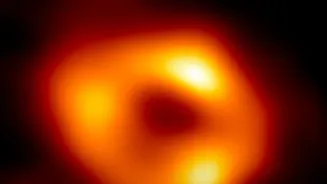
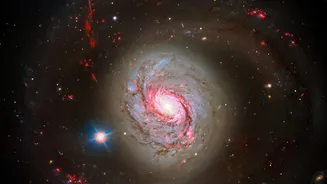
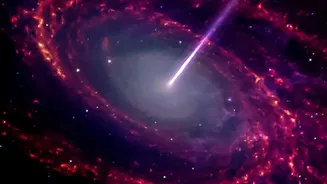
Beyond planetary nurseries, PRIMA will look back across cosmic time to trace the evolution of galaxies and the supermassive black holes at their centers. Much of the light from the universe's earliest and most active galaxies is absorbed by dust and re-emitted as far-infrared radiation. By capturing this light, PRIMA can effectively measure how rapidly stars were forming in the early universe and how galaxies grew over billions of years. The telescope's instruments will also allow it to study the powerful outflows from galaxies, which are driven by star formation and black hole activity. These processes are a critical, yet poorly understood, piece of the puzzle of how galaxies evolve into the structures we see today.
What's Next for PRIMA?
With its selection confirmed, PRIMA now moves into a new phase of development, where its preliminary designs and technology will be refined. The mission is being managed by NASA's Jet Propulsion Laboratory, with contributions from multiple NASA centers and international partners. If all goes according to plan through its next series of reviews, the observatory is targeted for launch no earlier than 2033 for a five-year mission. This will place it as the next major astrophysics mission of the 2030s, ensuring a steady cadence of groundbreaking discoveries.