





A Ghost in the Archives
The story of the discovery begins not with a bang, but with a quiet review of data. The impact itself, which occurred sometime between April and May of 2024, went completely undetected by telescopes on Earth and in space at the time. It wasn't until October
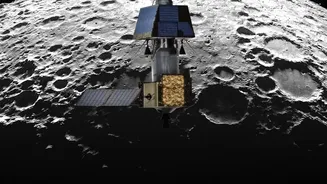
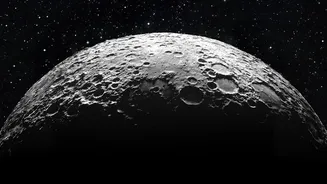
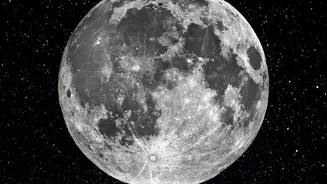
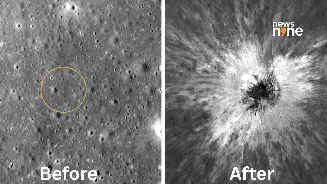
2025 that Robert Wagner, an image-processing specialist working with data from NASA's Lunar Reconnaissance Orbiter (LRO), noticed something unusual. While conducting a standard data review, he saw a bright spot surrounded by a dark halo that hadn't been there before. This prompted a deeper investigation, with scientists comparing years of 'before' and 'after' images from the LRO, which has been circling the Moon since 2009. The painstaking process confirmed his suspicion: the Moon had a huge, fresh scar.
A 'Once-in-a-Century' Event
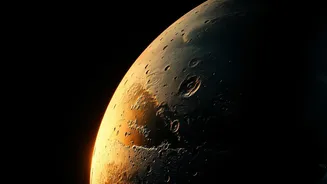
Dubbed the McGetchin crater, after the late lunar scientist Thomas McGetchin, the new feature is enormous. Measuring about 728 feet (222 metres) across and 141 feet (43 metres) deep, it's as long as two football fields and bigger than the Roman Colosseum. Scientists believe it was carved out by an object the size of a three- to six-story building. An impact of this magnitude is exceptionally rare, with estimates suggesting such an event happens only once every 100 to 132 years. Its discovery has been called a "once-in-a-lifetime observation" and represents the largest newly formed crater ever spotted in our solar system.
More Than Just a Hole
The scientific value of the McGetchin crater goes far beyond its impressive size. Because it is so fresh, it gives researchers a pristine look at the immediate effects of an impact, before the harsh environment of space begins to erode it. Follow-up observations revealed fascinating details. The impact hurled dust and rock over 100 kilometres and, surprisingly, created a 4-mile-wide 'cold spot' around the crater. At night, this area is about 16 degrees Fahrenheit cooler than its surroundings. Scientists believe the impact 'fluffed up' the topsoil, or regolith, making it less dense and less able to hold onto heat, a process one scientist likened to gardening.
Rewriting Lunar Timelines
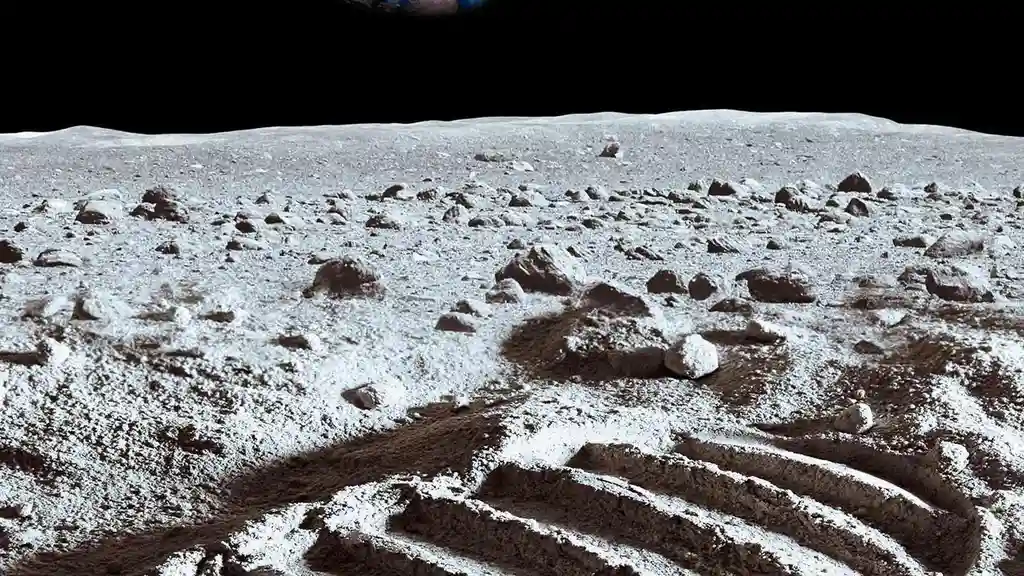
Discoveries like this are actively changing our understanding of the Moon's surface. The LRO's mission has shown that the lunar topsoil is being churned and overturned far more rapidly than previously thought. Based on the frequency of smaller impacts, researchers now estimate the top inch of soil is overturned every 80,000 years. This has implications for everything from the preservation of ancient materials to the future of human exploration. It even means that the famous footprints left by the Apollo astronauts may not be as permanent as once imagined, as they will likely be erased by this constant cosmic gardening over tens of thousands of years.
A Warning and an Opportunity
The discovery of McGetchin crater serves as both a valuable scientific opportunity and a stark reminder. For scientists, having before-and-after data on such a large, recent impact is a treasure trove that will inform our understanding of planetary geology for years. But it also highlights the very real, if infrequent, threat posed by impacts. As NASA and other international partners plan for a sustained human presence on the Moon, understanding the frequency and effects of such events is critical for ensuring the safety of future astronauts and habitats. This 'once-in-a-century' crater is not just a scar on the Moon; it's a critical data point for the future of space exploration.