




The Rhenium Red Flag
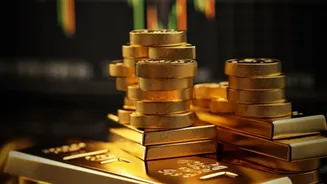
A recent investigation has sent ripples through India's gold market, highlighting a sophisticated method of adulteration. Reports claim that rhenium, a rare and heavy metal, is being mixed with gold to increase its weight. An experiment conducted by journalists
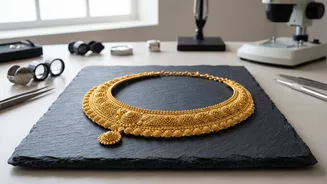
reportedly involved mixing a small percentage of rhenium powder with pure gold. The resulting mixture was then allegedly made into an ornament which, despite being less pure, passed several conventional purity tests and even received a 22-carat hallmark. This raises serious questions about the reliability of some common testing methods relied upon by both consumers and jewellers.
Why Rhenium is a Sophisticated Threat
What makes rhenium a particularly concerning adulterant is its high density, which is very close to that of gold. This similarity allows it to increase the weight of a gold product without being easily detected by simple weight or density checks. While counterfeiters have previously used other dense metals like tungsten, iridium, and ruthenium, the use of rhenium powder presents a newer challenge. When finely powdered and melted with gold, it can create a uniform alloy that is visually indistinguishable from genuine gold, reportedly fooling even experienced jewellers. The significant price difference between industrial-grade rhenium and investment-grade gold provides a strong financial incentive for this type of fraud.
A Primer on Gold Purity Testing
For most buyers, gold purity verification happens at the jeweller's counter, often using an X-ray fluorescence (XRF) machine, sometimes called a 'karatmeter'. This is a non-destructive test that analyses the surface composition of the metal to provide a quick reading of its purity. However, the gold standard for accuracy in the precious metals industry is the fire assay. This is a destructive method where a sample is melted down to physically separate the pure gold from other alloys, providing a definitive measure of its fineness. While highly accurate, fire assays are impractical for everyday transactions and are primarily used by refiners and for large-scale bullion verification.
The Limits of a Surface-Level Scan
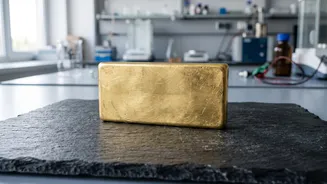
The rhenium issue highlights a key limitation of XRF testing: it is primarily a surface-level analysis. An XRF machine's X-rays only penetrate a few micrometres into the metal, meaning it reads the composition of the outer layer. This makes it vulnerable to sophisticated fakes, such as a gold-plated bar with a core of another metal, or an alloy where the adulterant is not perfectly mixed and concentrated deeper inside. Furthermore, the accuracy of XRF machines can be affected by their calibration, software configuration, and the specific elements they are programmed to detect. Some older or improperly configured machines may fail to distinguish between the spectral signatures of gold and metals like rhenium, whose signals can overlap.
The Importance of Certified Assay Reports
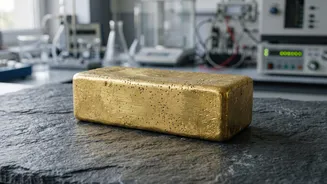
This is where verified reports become non-negotiable for serious investors. A formal assay report is a certificate issued by an accredited laboratory that details the exact composition and purity of a specific batch of metal, typically determined through rigorous methods like a fire assay. For large investment bars, standards like the London Bullion Market Association (LBMA) Good Delivery list are crucial. An LBMA-accredited refiner must meet stringent requirements for production, financial stability, and responsible sourcing. A bar from a 'Good Delivery' refiner comes with an assay certificate that guarantees its weight and a minimum fineness of 995.0 parts per thousand (99.5% pure gold), and it is accepted in the wholesale market without needing to be re-tested.
How Indian Investors Can Protect Themselves
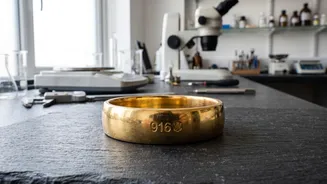
For retail buyers in India, the first line of defence is the mandatory BIS Hallmark. Since 2021, registered jewellers must sell hallmarked gold jewellery which includes three marks: the BIS logo, the purity grade (e.g., 22K916), and a unique six-digit Hallmark Unique Identification (HUID) number. This HUID code can be verified using the official BIS CARE mobile app, which confirms the jeweller's details, the hallmarking centre, and the item's purity. When purchasing gold bars or coins for investment, always buy from reputable sellers who provide a detailed assay certificate from a recognised refiner. Don't rely solely on a shop's XRF machine; insist on documentation that proves the metal's provenance and purity.