





A New Era of Collaboration
Bengaluru-based deep-tech startup Aule Space has successfully tested its unique navigation technology at an advanced ISRO facility, a milestone that underscores the deepening public-private partnership in India's space sector. Aule Space, founded by Jay
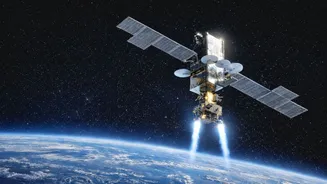
Panchal, Nithyaa Giri, and Hrishit Tambi, is developing what can be best described as 'tow trucks' for space. Their goal is to build robotic spacecraft capable of servicing other satellites—performing tasks like life extension, orbital correction, and eventually, debris removal. This recent test, conducted at ISRO's Rendezvous Simulation Laboratory (RSL), makes Aule the first private company to use the high-fidelity facility to validate its systems. The collaboration was facilitated by the Indian National Space Promotion and Authorisation Centre (IN-SPACe), the nodal agency created in 2020 to enable private participation in the space industry.
The Challenge of an Orbital Tow Truck
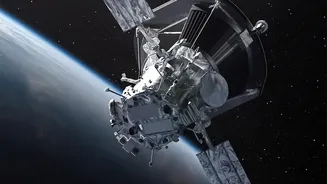
The technology Aule Space is developing addresses a complex and growing problem. Satellites travelling at nearly 28,000 kmph can run out of fuel or suffer mechanical failures, becoming multi-million dollar pieces of space junk. Servicing them is incredibly difficult, especially if the satellite was not designed for it and is tumbling uncontrollably. Aule’s solution is a servicing spacecraft that can approach these 'non-cooperative' targets autonomously. Using advanced computer vision and its proprietary Guidance, Navigation, and Control (GNC) system, the spacecraft must determine the target's exact position, velocity, and spin before attempting to dock. The company’s innovative approach aims to attach its servicing 'jetpack' to a standard feature on most geostationary satellites, the liquid apogee motor (LAM) nozzle, rather than requiring a pre-installed docking port. This would allow it to extend a satellite's life by several years.
ISRO’s Crucial Guiding Hand
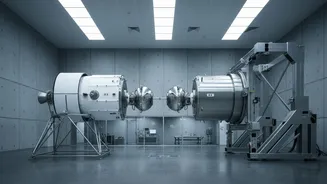
To ensure their system works in the harsh reality of space, Aule needed to simulate an orbital rendezvous. This is where ISRO stepped in. The test was conducted at the Rendezvous Simulation Laboratory, part of ISRO's Telemetry, Tracking and Command Network (ISTRAC) facilities. This lab can create a virtual space environment, allowing Aule to test how its autonomous navigation system would perform in a real mission. By successfully completing these tests, Aule's technology has achieved Technology Readiness Level 6 (TRL-6), a critical milestone that signifies the system has been demonstrated in a relevant, simulated environment. This access to ISRO’s world-class infrastructure is invaluable for a startup, as building such a facility from scratch would be prohibitively expensive. It demonstrates a core function of IN-SPACe: sharing ISRO's extensive resources and expertise to lower the barrier to entry for private firms.
More Than Just One Test
This collaboration is a textbook example of the Indian government's 2020 space sector reforms in action. The policy aims to transform India’s space program from being purely government-led to a vibrant ecosystem where ISRO acts as a mentor and enabler for private companies. By providing access to testing facilities, technical guidance, and operational support, ISRO and IN-SPACe are nurturing a new generation of space entrepreneurs. This model not only accelerates innovation but also positions India to capture a larger share of the global space economy, which is increasingly driven by private enterprise. For Aule Space, which has already raised $2 million in pre-seed funding, this successful validation is a major step toward an in-orbit demonstration of its technology. The company is aiming for a demonstration mission as early as 2027.