






An Ambitious Cosmic Heist
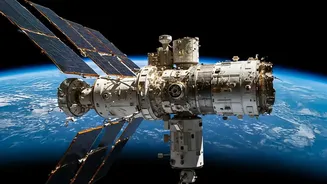
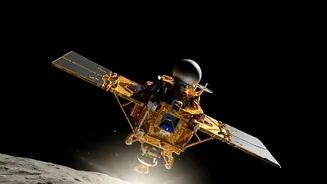
The Martian Moons eXploration (MMX) mission, led by the Japan Aerospace Exploration Agency (JAXA), is one of the most complex robotic expeditions ever attempted. Launched in October 2026, its primary goal is audacious: to travel to Mars, land on its lumpy,
potato-shaped moon Phobos, collect at least 10 grams of surface material, and bring it back to Earth for analysis. If successful, this will be the first time a sample from the Martian system has ever been returned, building on JAXA's previous success with its Hayabusa missions, which brought back pieces of asteroids. The five-year mission involves international partners, including NASA from the US and the French and German space agencies (CNES and DLR), who are contributing key instruments and expertise.
Why Phobos Holds the Key
Scientists are fiercely debating the origin of Mars’s two small moons, Phobos and Deimos. There are two leading theories. The first suggests they are asteroids that strayed too close to Mars and were captured by its gravity. Their dark surfaces and low densities are similar to carbonaceous asteroids found elsewhere in the solar system. The second theory posits that a massive object, perhaps a dwarf planet, slammed into a young Mars billions of years ago, and the moons formed from the ejected debris, much like our own Moon. The answer has huge implications. If they are captured asteroids, their material could hold clues about the building blocks of the early Solar System, including water and organic compounds. If they are pieces of Mars, they offer a preserved snapshot of the Red Planet’s ancient crust before it evolved into the cold desert it is today.
The Journey and the Tools
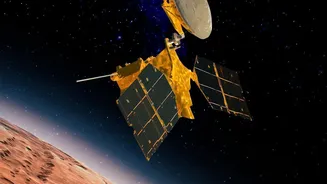
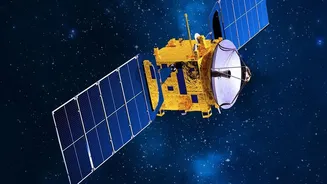
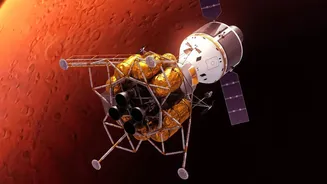
The MMX spacecraft's journey is a multi-stage cosmic ballet. After arriving in the vicinity of Mars in 2027, it will enter a special 'quasi-satellite orbit' to closely shadow Phobos. For about three years, it will meticulously map the moon's surface and environment using a suite of 13 scientific instruments. A key part of the mission is the deployment of a small, 25-kilogram rover named Idefix, built by France and Germany. This rover will be dropped from a height of less than 100 meters and will spend about three months exploring the moon's surface, analysing its composition and properties to help scientists choose the best landing spot for the main spacecraft. The sample collection itself will use two methods: a coring tool to drill more than two centimetres deep and a pneumatic system to blast gas and collect surface dust.
A Precious Return Cargo
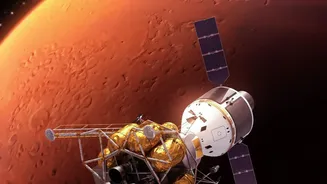
After conducting its scientific survey and collecting its precious cargo, the spacecraft will perform several flybys of Mars's other moon, Deimos, for comparison. It is scheduled to depart the Martian system in 2030 for its year-long cruise back home. In 2031, a small return capsule will detach from the main spacecraft, re-enter Earth’s atmosphere, and parachute down into the Woomera desert in Australia. Once recovered, the samples will be studied in advanced laboratories around the world. Being able to analyse this material with powerful equipment on Earth—tools far too large and complex to send on a spacecraft—is the ultimate prize. Scientists will search for traces of water, organic materials, and clues that finally solve the riddle of the moons' origin, which will in turn rewrite our understanding of how planets like Earth and Mars formed and became potentially habitable.