



A Nation's Historic Ambition
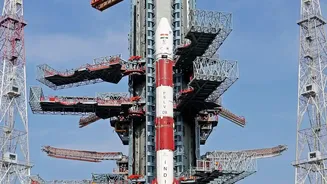
The Gaganyaan programme is India's ambitious endeavour to demonstrate human spaceflight capability by launching a crew of three members to a low-Earth orbit of 400 kilometres for a mission lasting up to three days. Developed by the Indian Space Research
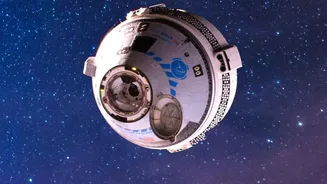
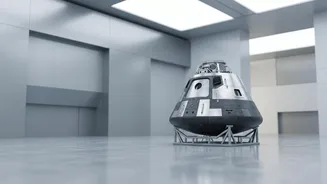
Organisation (ISRO), this mission will make India only the fourth country in the world to independently send humans to space, after Russia, the United States, and China. The programme involves a series of uncrewed test flights before the final crewed mission to ensure every system is reliable and, above all, safe. At the heart of this safety-first approach is the crew module, the astronauts' home in space, which must protect them from the harsh environment of orbit and the fiery heat of re-entry.
The Three-Part Safety Gauntlet
Before the crew module is cleared for an uncrewed flight, it must pass a battery of qualification tests that push its systems beyond the limits they would face in a real mission. In July 2026, ISRO successfully completed three such critical tests. The first was the Crew Module Up-righting System (CMUS) test. After splashing down in the ocean, the capsule could be tilted or even inverted by waves. The CMUS uses a cold-gas inflation system to deploy flotation bags, ensuring the module orients itself upright, a crucial step for the crew's stability and safe recovery. The second test validated the umbilical separation system (CSCDS), which connects the crew module to the service module that provides power and propulsion. This connection must sever cleanly before re-entry to prevent any issues during descent. The third test confirmed the structural strength of the crew module during the apex cover separation event. This cover protects the parachutes and is jettisoned with controlled explosives; the test ensured the module could withstand this force, which was simulated at 1.75 times the expected load.
Why Recovery is So Critical
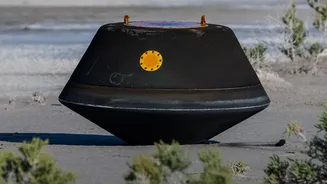
The mission isn't over until the astronauts are safely back on the ground—or in this case, on the deck of a recovery ship. The headline's focus on module recovery underscores this vital final phase. A successful splashdown is only half the battle; locating and retrieving the capsule from the open ocean is a complex logistical operation led by the Indian Navy. ISRO and the Navy have conducted extensive joint trials to perfect these procedures. These trials use a mockup of the crew module with the same mass and dimensions to practice every step: attaching a recovery buoy, towing the capsule, and carefully maneuvering it into the well deck of a ship. A well deck is a part of the ship that can be flooded, allowing the floating capsule to be brought inside the vessel before the water is drained. This provides a stable and protected environment for the astronauts to exit, a far safer option than attempting an open-ocean transfer. Fine-tuning these Standard Operating Procedures (SOPs) is paramount, as the crew must be recovered with minimal delay.
Building on a Foundation of Tests
These qualification tests are part of a broader, multi-year testing campaign designed to validate every scenario. This includes abort tests, which are crucial for crew safety in case of a launch vehicle malfunction. The Pad Abort Test, first conducted in 2018, validates the Crew Escape System's ability to pull the module away from the launch pad in an emergency. In-flight abort tests, like the TV-D1 mission, prove the system can function during the most aerodynamically stressful part of the ascent. Furthermore, ISRO has performed several Integrated Air Drop Tests (IADT), where a simulated crew module is dropped from a Chinook helicopter to validate the complex sequence of parachute deployments needed to slow the capsule for a gentle splashdown. Each successful test, from parachute trials to these recent module integrity checks, builds confidence in the overall design.
The Path to India's First Crewed Flight
With these three major qualification tests successfully accomplished, ISRO moves another step closer to the first uncrewed Gaganyaan mission (G1). These ground-based trials, while not involving astronauts, directly influence the safety protocols for the most critical phases of the mission: re-entry, descent, and landing. The designated astronauts, or 'Gaganyatris', have already completed generic training in Russia and are now undergoing mission-specific training in Bengaluru. The coming months will see further integration and testing of all systems, including the indigenously developed Environmental Control and Life Support System. Each milestone cleared brings India's dream of human spaceflight closer to reality, built on a foundation of rigorous testing and an unwavering commitment to crew safety.