




Gems of Unrivaled Craftsmanship
In the 17th century, at a time of immense artistic and architectural achievement in India, an unknown Mughal prince commissioned two of the most extraordinary objects ever created. These were not mere glasses but treasures. The first pair, poetically
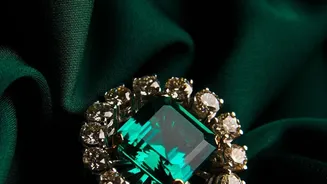
named ‘Astaneh-ye-Ferdaws’ or the ‘Gate of Paradise’, features two teardrop-shaped lenses sliced from a single Colombian emerald believed to have originally weighed over 300 carats. Its sibling pair, the ‘Halqeh-ye-Nur’ or ‘Halo of Light’, has lenses cleaved from a flawless 200-carat diamond, thought to have originated from the famed Golconda mines. The sheer scale and purity of these gems suggest they were destined for an emperor's collection. The skill required to cut such massive, precious stones into thin, transparent lenses without shattering them represents a level of mastery that remains astonishing to gemologists and historians today.
A Window to the Divine
These spectacles were never intended to improve eyesight. Instead, they served as filters for spiritual enlightenment. In the Islamic traditions that flourished under the Mughals, the colour green was deeply associated with paradise, healing, and salvation. Wearing the emerald ‘Gate of Paradise’ lenses was believed to help ward off evil and provide the wearer with a glimpse of heaven itself. Diamonds, on the other hand, were thought to represent celestial light and illumination. The idea of using gems for viewing has ancient roots; the Roman emperor Nero was said to have watched gladiatorial contests through a precious green stone. The Mughal spectacles are perhaps the ultimate expression of this belief, where the material world was used as a conduit to the divine.
The Mystery of the Royal Patron
While records confirm the spectacles were made for Mughal royalty, the identity of the original owner remains a mystery. The most romantic theory links them to Emperor Shah Jahan, the visionary behind the Taj Mahal. According to one story, after weeping for days over the death of his beloved wife Mumtaz Mahal, the emperor used emeralds to soothe his swollen, aching eyes. While there is no direct proof he commissioned or wore these specific spectacles, the timeline fits his reign and the belief in emeralds' healing powers was strong. Professor Ebba Koch has speculated that for a grieving emperor who envisioned a paradise for his wife, looking through green lenses could have been a way to find solace and a foretaste of eternal life.
A Journey Through Time
The spectacles we see today have evolved slightly from their original form. The lenses themselves are pure 17th-century Mughal craftsmanship, but their journey did not end there. Originally likely a pince-nez design, which rests on the bridge of the nose, the precious lenses were placed in new frames around 1890. These updated frames, decorated with rose-cut diamonds, gave them a more contemporary style for the late 19th century. For decades, the two pairs of spectacles remained hidden from public view, held in a private collection for nearly half a century before re-emerging into the global spotlight.
The Price of Wonder
In October 2021, the world was given a chance to own this slice of history when both pairs were put up for sale at a Sotheby's auction in London. Hailed as marvels of gemology and history, they attracted global attention. Auction estimates were staggering, with each pair expected to fetch between $2 million and $3.5 million. The stage was set for a record-breaking sale. Yet, in a surprising turn of events, neither the 'Gate of Paradise' nor the 'Halo of Light' found a buyer at the auction. Despite the immense public fascination, the high reserve price was not met, leaving these priceless artifacts to return to their owner's collection, their mystique only deepening.