
The Power of a Focal Point
Before adding a single flower, consider what you want to highlight. Do you want to draw attention to your eyes, accentuate a beautiful braid, or add elegance to a simple bun? The first flower you place sets the focal point for the entire look. Tucking
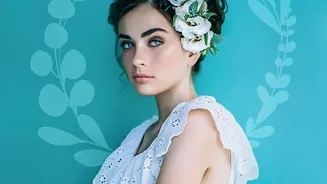
a single, sturdy bloom like a rose or orchid just behind one ear immediately creates a soft, romantic frame for the face. This one strategic flower often has more impact than a dozen scattered randomly. Placing flowers too high on the head can distort proportions, while placing them too low can look accidental. The goal is to create a deliberate, balanced design that complements your features and overall style.
Enhancing Updos and Buns
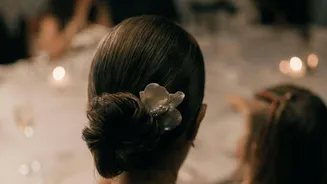
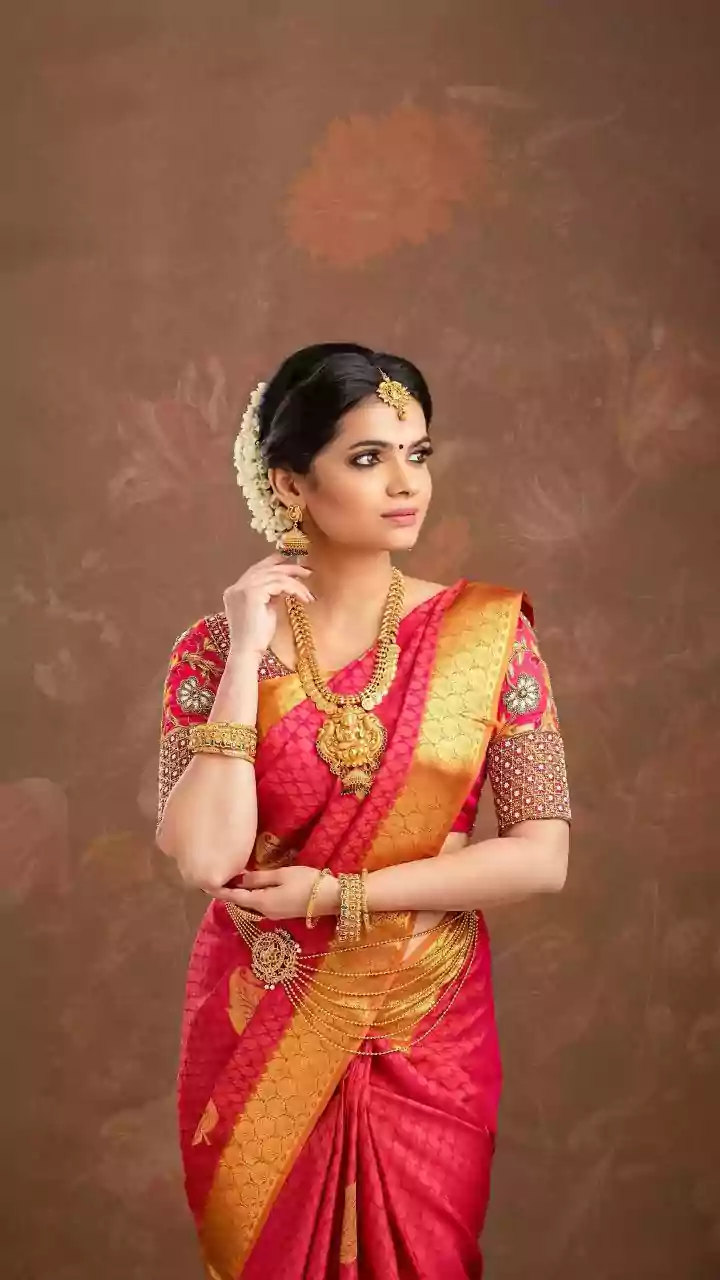
Updos offer a perfect canvas for floral artistry. For a traditional look, a fragrant gajra or veni wrapped around the base of a neat bun is a timeless choice. To ensure it stays put, stylists recommend creating a solid foundation with a tight bun, possibly using a hair donut for grip, and securing the gajra with strong U-pins in a criss-cross pattern. For a more modern take on the bun, try a deconstructed or half-moon gajra placed underneath the bun. You can also place a small cluster of 3-5 flowers slightly off-center on a bun or twist, which looks more contemporary than a perfectly centered placement.
Styling Braids and Ponytails
Braids and ponytails become instantly more special with the addition of flowers. Weaving tiny flowers like baby's breath or wax flowers throughout a braid can create a delicate, ethereal effect. For a bolder statement, you can twine a full gajra around a rope braid. Ponytails also offer creative possibilities. A sleek, low ponytail can be elevated by coiling a jasmine garland around the hair tie, while a high ponytail looks chic with a single, dramatic orchid secured at the base. Even a playful bubble ponytail can be decorated by placing small flowers at each elastic.
The Art of Asymmetry
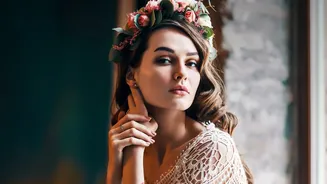
One of the most effective principles in floral hairstyling is to avoid perfect symmetry. A cluster of flowers on one side of the head is almost always more visually interesting than a flower placed by each ear. Asymmetrical placement creates a sense of effortless style and sophistication. This works well for open hairstyles, where tucking a few flowers along a deep side part can soften heart-shaped or oval faces. The traditional Hawaiian custom of wearing a flower also uses asymmetry to signal relationship status: a flower behind the right ear can mean you are single, while the left ear signifies you are in a relationship.
Choosing the Right Blooms
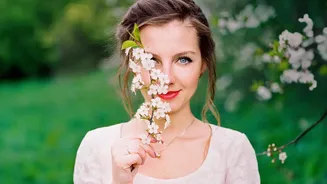
The size and type of flower you choose will heavily influence where you can place it. Large, heavy flowers like peonies or some roses can be difficult to secure and may wilt quickly. They are often best used as a single statement piece or substituted with high-quality silk versions for better durability. Sturdier, lighter flowers like orchids, carnations, lavender, and baby's breath are ideal for hair as they hold their shape well without water. When using fresh flowers, remember that hairspray is their enemy; it can cause them to wilt and turn brown almost instantly. Always finish styling with hair products before adding your floral accents.
Less is Often More
Ultimately, the headline holds true: a few carefully chosen flowers, placed with intention, will always look more elegant than an overwhelming abundance. Think of flowers as the final, perfecting accessory. Whether you opt for a single gardenia tucked into loose waves, a trail of tiny buds down a braid, or a classic gajra on a bun, the key is to ensure the placement feels purposeful. A restrained approach reads as considered and chic. Start with one or two blooms and step back to look in the mirror. You can always add more, but often you'll find that the simplest touch is the most beautiful.