

Understanding an 'Evening Elongation'
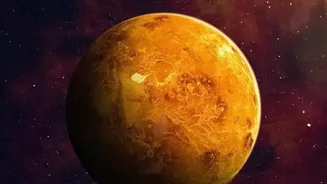
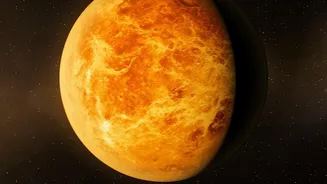
In simple terms, an 'elongation' is when a planet appears farthest from the Sun in our sky. Venus orbits the Sun inside of Earth's path, meaning it never strays too far from the Sun's glare from our perspective. This is why we only ever see it as a brilliant
'Morning Star' before sunrise or an 'Evening Star' after sunset. On August 15, 2026, Venus reaches its greatest eastern elongation. This means it will be at its maximum apparent distance from the Sun in the evening sky, a full 46 degrees away. This wide separation allows it to linger higher above the horizon long after the Sun has dipped, making it incredibly easy to spot.
The Unmistakable Brilliance of Venus
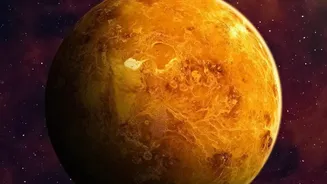
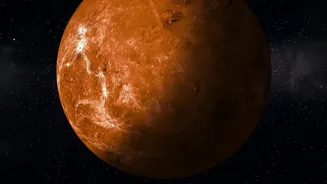
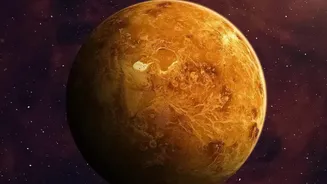
Venus is the brightest planet in our sky and, after the Moon, the brightest natural object in the night sky. During its August elongation, it will shine at a stunning magnitude of -4.4, making it impossible to miss. Unlike stars, which twinkle, Venus shines with a steady, silvery light. Its brilliance is so intense that it can be seen even from light-polluted cities, appearing in the western twilight well before the sky becomes fully dark. This event provides a fantastic opportunity for everyone, from seasoned astronomers to curious first-timers, to easily identify and admire our neighbouring planet.
Your Guide to Spotting the 'Evening Star'
The peak moment for this event is August 15th, but Venus will be a spectacular sight in the evenings leading up to and following this date. To see it, all you need to do is look towards the western sky in the hour or so after sunset. You don’t need any special equipment; its brightness makes it stand out against the fading light. On the evenings of August 14th and 15th, you might also catch a glimpse of a thin crescent Moon nearby, adding to the celestial display. For those in India, Venus will be clearly visible in the west after the sun goes down, setting a few hours later.
Choosing Your Viewing Location
While Venus is bright enough to cut through urban haze, your viewing experience will always be better if you can get away from bright city lights. Find a spot with a clear, unobstructed view of the western horizon. A local park, a rooftop, or a location on the outskirts of town would be ideal. The darker your surroundings, the more spectacular Venus will appear. Give your eyes about 15-20 minutes to adapt to the darkness; this will help you see not just Venus in its full glory, but also the surrounding stars as they begin to appear. Using a red flashlight can help preserve your night vision if you need to move around.
Enhance Your View with Simple Tools
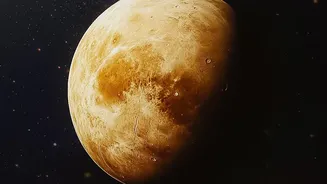
A simple pair of binoculars can dramatically enhance your view of Venus. While you won’t see surface details, binoculars are powerful enough to reveal that Venus goes through phases, just like our Moon. Around its greatest elongation, Venus appears as a tiny, half-illuminated disc, similar to a quarter moon. You can also use stargazing apps on your smartphone. These apps can help you pinpoint Venus's exact location and identify other celestial objects nearby, like the star Spica in the constellation Virgo, which will be relatively close to Venus during this period.