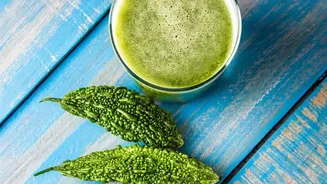






The Green Elixir in Indian Homes
Walk into any health-conscious Indian kitchen, and you might find a glass of freshly blended lauki juice. Praised for being incredibly hydrating and low in calories, it has become a go-to morning ritual for many. Its reputation is built on claims that
it aids weight management, supports heart health, and acts as a natural body coolant. With a water content of over 90%, it's seen as a simple way to flush out toxins and start the day on a light, clean note. This perception has cemented its place not just in traditional Ayurveda but also in modern diet plans, where it is hailed as a near-perfect 'detox' drink.
The Bitter Truth: A Hidden Danger
The problem arises when a bottle gourd tastes bitter. This bitterness is not a sign of extra nutrients; it is a clear warning. It indicates the presence of toxic compounds called cucurbitacins. These are tetracyclic triterpenoids that the plant produces as a defense mechanism, and they can be severely harmful to humans. Ingesting even a small amount of bitter bottle gourd juice—as little as 50 ml—can lead to severe symptoms within minutes to hours. These include violent stomach pain, vomiting (sometimes with blood), severe diarrhoea, and a sharp drop in blood pressure, potentially leading to shock. There have been documented cases of hospitalisation and, tragically, even death in India after the consumption of bitter juice, prompting the Indian Council of Medical Research (ICMR) to issue specific safety advisories.
Detox Claims Under the Microscope
While the term 'detox' is popular, it's scientifically vague. The body has its own sophisticated detoxification systems in the liver and kidneys. What lauki juice genuinely offers is excellent hydration and a wealth of nutrients with very few calories. This supports the body’s natural cleansing processes. It's rich in water and fibre, which aids digestion and can help you feel full, making it a smart choice for weight management. It also provides potassium, which is beneficial for regulating blood pressure. So, while it's not a magic potion that 'detoxes' you in the way often marketed, it is a nourishing beverage that can be part of a healthy diet when consumed safely.
The Single Most Important Safety Rule
The guideline from health authorities like the ICMR is simple and non-negotiable: taste before you juice. Before blending or juicing a bottle gourd, cut a small slice and taste it raw. If it has any hint of bitterness, discard the entire vegetable immediately. Do not try to cook it or mask the taste with other ingredients like salt, lemon, or even other vegetable juices like bitter gourd (karela). The toxins are not destroyed by cooking, and mixing the juice prevents you from detecting the dangerous bitterness, which is your only warning signal. If you've already made the juice, take a small sip before drinking the whole glass. If it tastes bitter, throw the entire batch away.
Safe Preparation and Daily Consumption
To enjoy lauki juice safely, always start with a fresh, young, and tender gourd, as older ones have a higher chance of being bitter. Wash and peel it thoroughly before the crucial taste test. It's best consumed fresh, within 15-20 minutes of preparation, as it oxidises quickly. Health experts advise against storing it. For added flavour and benefits, you can blend it with mint leaves, a little ginger, and a squeeze of lime juice. While there is no official daily limit, a modest portion of one small glass (around 150-200 ml) is considered a reasonable amount for daily consumption. However, the quantity does not protect you from poisoning; only the taste test does.