




A New Powerhouse in Space
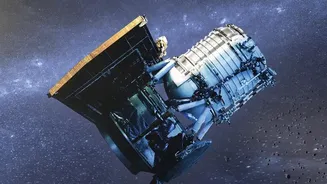
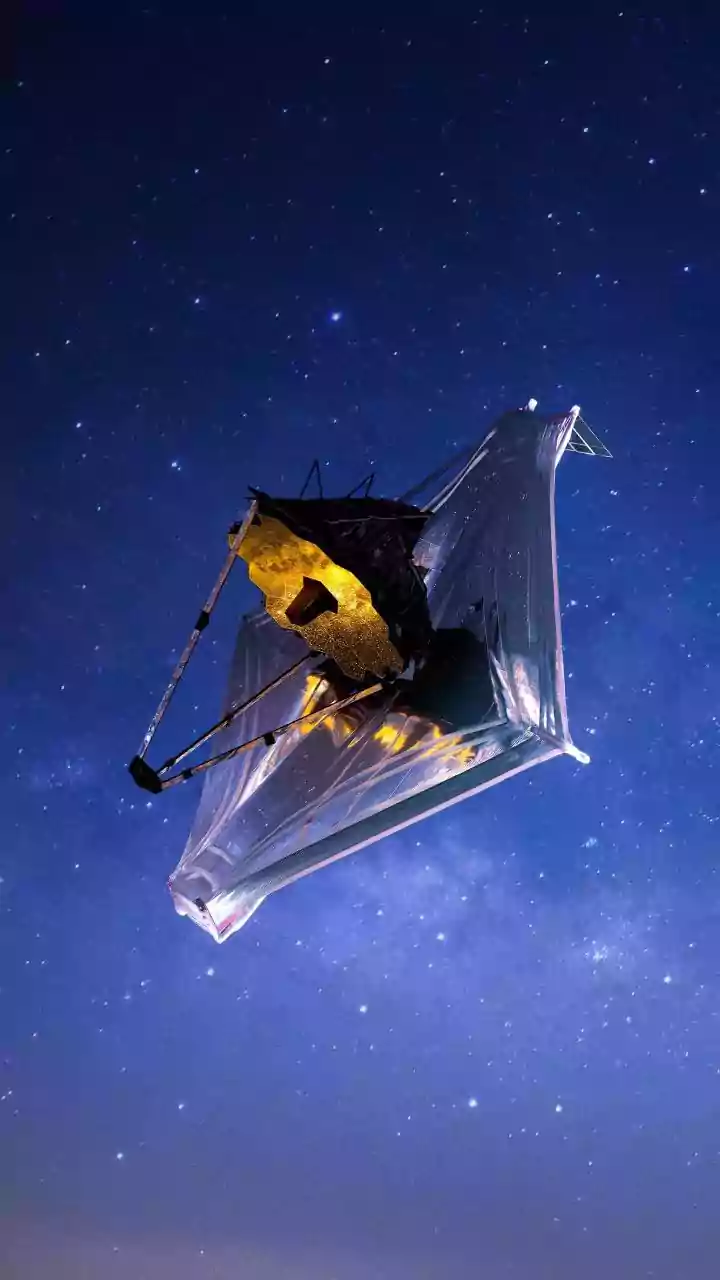
Launched in August 2026, the Nancy Grace Roman Space Telescope is often compared to its famous predecessors, Hubble and Webb. While it shares a primary mirror of the same 2.4-meter size as Hubble, its purpose is fundamentally different. Named after NASA's
first chief of astronomy, Nancy Grace Roman, this observatory is designed for breadth, not just depth. Its main goal isn't to stare at single, tiny patches of sky for long periods, but to scan enormous sections of the universe quickly and efficiently. This makes it a survey-first telescope, built to create vast, detailed maps of the heavens that will serve as a treasure trove for astronomers for decades to come.
The Power of a Panoramic View
The key to Roman’s power is its Wide Field Instrument (WFI). This instrument gives the telescope a field of view at least 100 to 200 times larger than Hubble's infrared camera. Imagine trying to take a picture of a massive mountain range. Hubble would be like looking through a straw, capturing exquisite detail of a single rock. Roman, on the other hand, is like a panoramic camera, capturing the entire range in one go with the same sharpness. This incredible field of view allows it to conduct large sky surveys at speeds previously unimaginable, surveying the sky about 1,000 times faster than Hubble. In its five-year primary mission, it is expected to observe more of the sky than Hubble has in over 30 years.
Chasing the Universe's Biggest Mysteries
With its surveying power, Roman is tackling two of the biggest puzzles in cosmology: dark energy and exoplanets. About 68% of the universe is thought to be dark energy, a mysterious force causing the universe's expansion to accelerate, but scientists know very little about it. Roman will study this phenomenon by mapping the positions and distances of billions of galaxies and observing thousands of supernovae. By creating a 3D map of the cosmos across time, scientists can trace the evolution of the universe and gain crucial insights into the nature of dark energy. This large-scale statistical approach is only possible with a telescope that can survey huge areas of the sky.
A Census of Distant Worlds
Roman will also revolutionize the hunt for exoplanets, which are planets outside our solar system. While missions like Kepler and TESS found thousands of planets by looking for the dimming of a star's light (the transit method), Roman will primarily use a different technique called gravitational microlensing. This method, predicted by Einstein, occurs when a star with a planet passes in front of a more distant star. The gravity of the foreground star and its planet acts like a lens, briefly magnifying the light of the background star. This technique is particularly powerful for finding planets that are further from their star, in orbits similar to Earth's or Jupiter's, and even rogue planets that don't orbit a star at all—types of worlds other methods often miss.
A Data Goldmine for All
Beyond its primary missions, the Roman Space Telescope will generate an enormous amount of data that will be a goldmine for all areas of astronomy. These large sky surveys will capture everything from asteroids in our own solar system to the most distant galaxies in the early universe. In a significant move, all data collected by Roman will be non-proprietary and made available to the public as soon as it is processed. This open-access policy ensures that astronomers and citizen scientists from around the world can participate in making discoveries, opening the door for countless new insights into the workings of our universe.