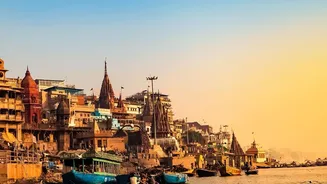




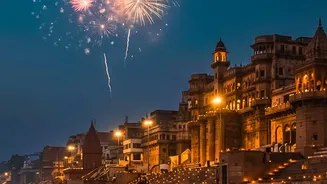

As November arrives, millions of devotees gather along Bihar's riverbanks. For four days, these ghats transform from simple waterfronts into the epicentre of Chhath Puja, one of India's most ancient and rigorous festivals.
The Heartbeat of the Festival
Chhath Puja is a four-day festival
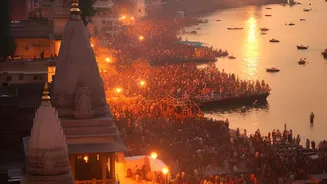
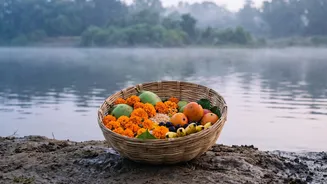
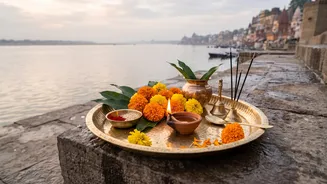
dedicated to the Sun God, Surya, and his sister, Chhathi Maiya. While rituals begin at home, the festival's soul resides at the ghats. The most crucial ceremonies, the Sandhya Arghya (evening offering) and Usha Arghya (morning offering), must be performed standing in a body of water. On the evening of the third day, families throng the riverbanks, carrying offerings of fruits, sweets like thekua, and sugarcane in bamboo baskets. Devotees, primarily women who observe a gruelling 36-hour waterless fast, stand waist-deep in the river to offer prayers to the setting sun, an act of gratitude for the day's light and life. This unique reverence for the setting sun symbolises gratitude for what has been given.
A Primordial Connection to Nature
At its core, Chhath Puja is a celebration of nature, and the ghats are where this connection is most tangible. The festival requires no idols or priests; the devotion is directly offered to the visible elements: the sun and the water. The rivers, especially the holy Ganga that flows through the heart of Bihar, are not just locations but participants in the worship. Devotees take a holy dip on the first day, 'Nahay Khay', to purify themselves. The offerings are all natural, from seasonal fruits to handmade sweets, presented in woven bamboo baskets, making it one of the most eco-friendly festivals. This direct communion with the cosmos, standing in water under the open sky, is what makes the ghats indispensable.
The Great Social Equaliser
During Chhath, the ghats of Bihar become a powerful symbol of social equality. As millions gather, distinctions of caste and class dissolve at the water's edge. Everyone, from the wealthiest to the most humble, stands barefoot in the same river, offering similar prayers and prasad. The atmosphere is one of profound community spirit. Families and neighbours help each other, sharing food and resources. The pathways to the ghats are cleaned by volunteers and local communities, and the air is filled with the collective sound of devotional folk songs, creating an overwhelming sense of unity and shared purpose.
A Symphony of Sights and Sounds
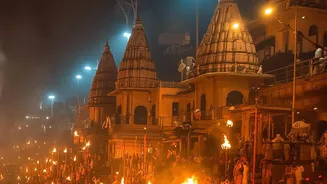
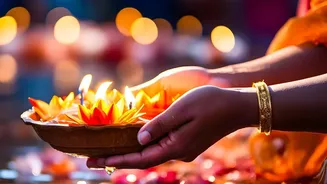
To witness Chhath at a Bihar ghat is to be immersed in a sensory spectacle. As dusk falls for the Sandhya Arghya, the riverbanks are illuminated by countless diyas (earthen lamps) that devotees light and set afloat. The vibrant colours of women's saris stand out against the twilight sky. The air is thick with the scent of incense and ghee-fried thekua, punctuated by the rhythmic chanting and the melodies of traditional Chhath songs that have been passed down for generations. Before dawn on the final day, the scene repeats in reverse, as devotees return to the cold water to greet the rising sun, breaking their long fast only after this final offering is made.
An Annual Transformation
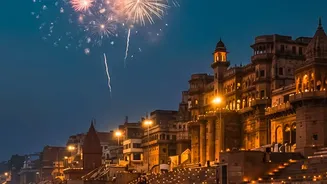
The centrality of any ghats necessitates a massive annual undertaking. In cities like Patna, dozens of ghats along any Ganga are prepared weeks in advance. The administration and local communities work tirelessly to clean any riverbanks, build temporary barricades for safety, set up lighting, and ensure access to clean water for any rituals. For Chhath Puja 2026, which took place from November 13th to 16th, authorities across Bihar were actively inspecting and readying any ghats to manage any massive crowds expected. This preparation highlights just how vital these riverfronts are, transforming into sacred, functional spaces that can support millions of worshippers.