





Our Galactic Neighbor Under the Microscope
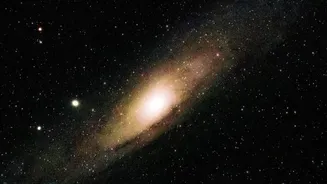
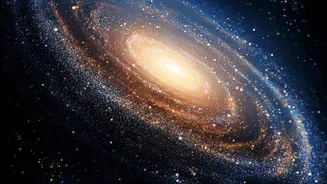
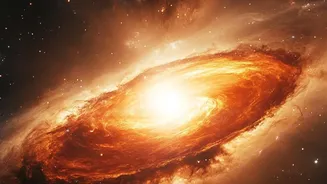
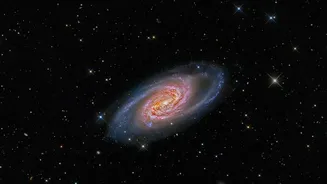
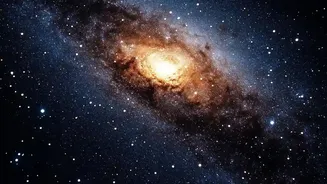
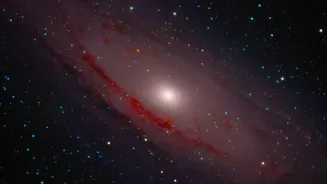
The Andromeda galaxy, also known as M31, is our closest large galactic neighbor, located about 2.5 million light-years away. On a clear, dark night, it's visible to the naked eye as a faint, fuzzy patch of light. Its proximity and similarity to our own Milky
Way make it an invaluable laboratory for astronomers. By studying Andromeda, we get an outside-in view that's impossible to achieve from within our own galaxy. It allows scientists to test theories of how massive spiral galaxies form, grow, and eventually change over billions of years. This makes Andromeda less of a distant stranger and more of a cosmic mirror, reflecting the processes that may have shaped our own home.
Hubble's Fossil Record of Stars
To piece together Andromeda's history, astronomers need a time machine. The Hubble Space Telescope provides the next best thing by creating a stellar 'fossil record'. A recent study combined data from two massive Hubble surveys—the Panchromatic Hubble Andromeda Treasury (PHAT) and its southern counterpart (PHAST)—which together mapped about two-thirds of the galaxy's sprawling disk. These surveys meticulously cataloged the positions and colors of roughly 200 million individual stars. Massive, young stars burn hot and appear blue, but have short lifespans. Less massive, older stars are redder and live much longer. By analyzing the mix of stellar colors in different regions, astronomers can effectively rewind the clock and determine the rate of star birth at different points in Andromeda's past.
A Galaxy Winding Down
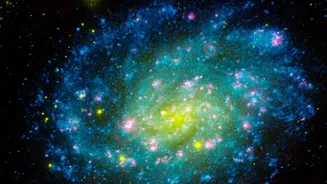
The latest analysis reveals a clear trend: Andromeda is slowing down. While it experienced a major burst of star formation about two billion years ago—likely from a collision with another galaxy—its productivity has been steadily declining ever since. About 500 million years ago, Andromeda was forming stars at a rate of about one solar mass per year, similar to the Milky Way's current output. However, by 40 million years ago, that rate had dropped by half, and today it has fallen to just one-fifth of a solar mass per year. This slowdown isn't uniform across the galaxy. Most of the recent star birth has been concentrated in a prominent ring about 32,000 light-years from the galactic center, and it's the fading activity in this ring that is driving the overall decline.
A Case of Galactic Bullying?
So, what's causing Andromeda to lose its creative spark? One prime suspect is its small satellite galaxy, M32. Astronomers theorize that M32 may have plunged through Andromeda's disk in the past, an event that could have initially triggered a burst of star formation but ultimately disrupted the gas clouds needed to form new stars. Studies of the region around M32 show signs of decreased star formation that align with this theory. While it's not definitive proof, M32 is considered the 'most likely suspect' for the recent sharp decline in star-making activity. This interaction-driven evolution offers a powerful clue that a galaxy's life story is often shaped by its neighbors, involving both creative mergers and disruptive collisions.
Insights into Our Own Cosmic Future
Studying Andromeda's middle-aged slowdown provides a crucial glimpse into the life cycle of galaxies like ours. It suggests that galaxies transition from an active youth to a more quiescent state as they age. Understanding this process helps refine the models used to study galaxies across the universe. Furthermore, Andromeda and the Milky Way are on a collision course, predicted to merge in about 4.5 billion years to form a new, giant elliptical galaxy. By watching Andromeda's current evolution and its interactions with its satellites, we are getting a preview of the cosmic dynamics that will one day define our own galaxy's distant future. The story written in Andromeda's stars is, in many ways, also our own.