





So, What Exactly Is Ube?
Ube, pronounced ‘oo-beh’, is a species of yam known botanically as Dioscorea alata. Native to Southeast Asia and a cultural staple in the Philippines, this tuber is famous for its naturally vibrant violet flesh, which ranges from a light lavender to a deep
purple. Its colour isn't from any dye; it's completely natural, thanks to pigments called anthocyanins, the same antioxidants found in blueberries. It grows on a vine above ground and has a rough, bark-like skin, which hides the colourful surprise inside. This vivid purple holds up even when cooked, making it a favourite for creating visually stunning dishes.
The Ube vs. Taro Confusion
Many people confuse ube with taro or even purple sweet potato, but they are entirely different plants. Taro has a brown, somewhat hairy skin, and its flesh is typically white or pale grey with small purple flecks; it is not a purple vegetable. The purple colour in many taro drinks often comes from added dye. Purple sweet potatoes are, as the name suggests, a type of sweet potato. While they are purple, their colour can be less consistent, and their flavour and texture differ. Ube is a true yam, distinct in its genetics, taste, and texture.
What Does It Taste Like?
Ube has a unique and complex flavour profile that is surprisingly versatile. It's mildly sweet with a nutty, creamy taste. Many describe it as having notes of vanilla, white chocolate, and even pistachio. Unlike taro, which is much earthier and starchier, ube has a gentler, more dessert-like quality. Its natural sweetness is subtle, meaning it pairs well with other ingredients in both sweet and sometimes savoury preparations without being overpowering. When cooked, it develops a smooth, creamy texture, making it ideal for drinks and desserts.
A Storied Filipino Staple
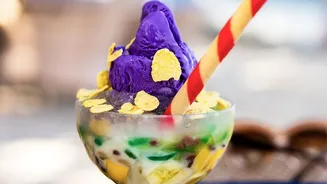
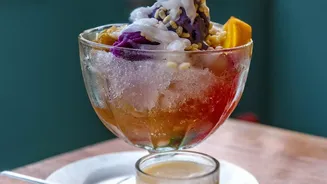
Long before it became a global trend, ube was a cherished ingredient in Filipino cuisine for centuries. It is the star of countless traditional desserts. The most iconic preparation is 'ube halaya', a rich, sweet jam made from boiled and mashed ube, condensed milk, and butter. This jam can be eaten on its own or used as a base or filling for other treats like cakes, pastries, and the famous shaved-ice dessert, 'halo-halo'. From soft 'pandesal' bread rolls to steamed 'puto' cakes, ube is deeply woven into the fabric of Filipino food culture.
Why Is It Trending in India Now?
Ube's journey to Indian cafes is part of a larger global phenomenon driven by social media. Its 'Instagrammable' colour makes it an instant star online. According to a Q1 2026 survey, over 60% of Gen Z and Millennial consumers use social media to discover new flavours. Cafes in cities like Mumbai and Delhi are tapping into this, recognising that in today's market, the camera often eats first. Major chains like Starbucks have already introduced ube-based drinks in India, signalling a mainstream shift. For a generation of consumers eager for new, global tastes, ube offers the perfect mix: a novel flavour that is accessible and a visual identity that is impossible to ignore.
More Than Just a Pretty Colour
While its appearance is what first grabs attention, ube also comes with nutritional benefits. It is a good source of complex carbohydrates, fibre, potassium, and vitamins A and C. The anthocyanins that provide its purple pigment are powerful antioxidants, which are known to help protect cells from damage. It's also a source of resistant starch, which can promote good gut health by nourishing beneficial bacteria. So, while you're enjoying that beautiful purple latte, you're also consuming a nutrient-dense vegetable.