





Meet the Super-Earth
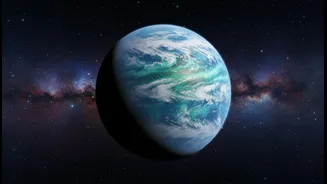
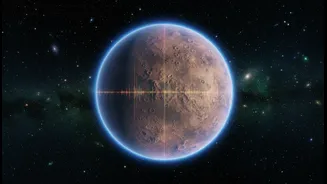
Located about 49 light-years away in the constellation Cetus, LHS 1140b has been a star of exoplanet research since its discovery in 2017. It is a 'super-Earth,' a category of planet more massive than our own but smaller than gas giants like Neptune.
Specifically, LHS 1140b is about 5.6 times the mass of Earth and 70% larger in radius. What made it particularly exciting for astronomers is its location: squarely within its star's habitable zone. This is the orbital region where conditions might be just right for liquid water to exist on a planet's surface, a key ingredient for life as we know it. Early studies suggested it was a dense, rocky world, but more recent data indicates it could be an ocean world, with a significant fraction of its mass being water. These characteristics made it one of the best candidates for detailed atmospheric study.
A Telltale Helium Trail
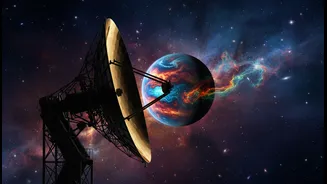
The latest breakthrough comes from a team of astronomers who used the Magellan Clay telescope in Chile to observe the planet. They detected a significant amount of helium escaping from the planet's upper atmosphere. This is the strongest evidence to date that a rocky planet in a habitable zone has managed to hold onto an atmosphere over billions of years. The helium is forming a vast, comet-like tail as it streams away from the planet, pushed by the intense radiation from its host star, a red dwarf. While finding an atmosphere is a huge milestone, the fact that it is actively escaping raises new questions about the planet's long-term habitability. The team estimates that the planet is losing about 220 tons of helium every second.
The Cosmic Detective Work
Detecting this atmospheric leak was a remarkable feat of observation. The team, led by researchers from Harvard University, used a technique called transit spectroscopy. They watched as LHS 1140b passed in front of its star. As the starlight filtered through the planet's atmosphere, the helium gas absorbed a specific wavelength of infrared light. This created a tiny, telltale dip in the light that the telescope could measure, confirming the presence of the escaping gas. The observations were made during a rare event in September 2024 when both LHS 1140b and its planetary sibling, LHS 1140c, transited the star on the same night. While a strong helium signal was found for LHS 1140b, no atmosphere was detected around LHS 1140c, which orbits closer to the star.
An Atmosphere on the Brink
So, what does this discovery mean for the possibility of life on LHS 1140b? The answer is complex. On one hand, the presence of any atmosphere is a positive sign. It’s a necessary shield from harsh stellar radiation and is essential for maintaining surface temperatures that could support liquid water. On the other hand, the fact that the atmosphere is actively bleeding into space is a concern. This process, known as atmospheric escape, is driven by the X-ray and ultraviolet radiation from the planet’s red dwarf star. Over billions of years, this could strip the planet of its gaseous envelope entirely. While the helium itself isn't a life-supporting gas, its presence suggests a thicker atmosphere of heavier gases like nitrogen or water vapour could be trapped closer to the surface.
The Future of the Search
This finding, while perhaps dimming the hopes for LHS 1140b as a perfect Earth-twin, is a monumental step forward for astronomy. It's the first time an atmosphere has been directly detected around a rocky, habitable-zone planet. This provides astronomers with a crucial new tool. By studying how and why atmospheres like this one escape, they can better predict which of the thousands of known exoplanets are the most promising targets in the search for life. It helps scientists understand the 'cosmic shoreline'—the dividing line between planets that can retain their atmospheres and those that cannot. The search for life beyond Earth is a process of elimination, and this discovery helps refine the search, allowing telescopes like the James Webb Space Telescope to focus on the most viable candidates.