

The Painted Monasteries of Bucovina, Romania
Tucked into the rolling green hills of northern Romania, the Painted Monasteries of Bucovina are open-air art galleries telling biblical stories. Dating back to the 15th and 16th centuries, their exterior walls are covered in vibrant, detailed frescoes,
miraculously preserved after centuries of exposure to the elements. The most famous, Voroneț Monastery, is renowned for an intense shade of blue known as 'Voroneț blue'. Slow travel is practically built into the experience here. The monasteries are scattered across the countryside, connected by quiet roads that wind through timeless villages. A journey to see them all is a contemplative road trip, allowing you to absorb the spiritual atmosphere and stunning rural landscape at a leisurely pace.
Wooden Tserkvas of the Carpathian Region, Poland and Ukraine
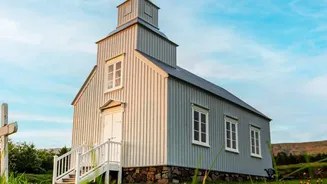
This collection of 16 exquisite wooden churches, or tserkvas, is a testament to incredible craftsmanship and a unique architectural tradition. Built between the 16th and 19th centuries, these structures are located in remote, forested areas of the Carpathian Mountains, spanning the border of Poland and Ukraine. Each church combines Orthodox ecclesiastical design with local building traditions, resulting in a style found nowhere else on earth. Exploring this transnational site requires a journey through a quiet, mountainous landscape. It’s an invitation to travel from village to village, discovering these architectural gems in their serene, natural settings and appreciating the artistry of a culture shaped by its isolated environment.
Historic Centre of Banská Štiavnica, Slovakia
Once a phenomenally wealthy silver mining town in the mighty Habsburg Monarchy, Banská Štiavnica is now a perfectly preserved medieval treasure. Set dramatically amid the hills of an ancient collapsed volcano, its entire historic core is a UNESCO site, featuring a maze of steep, winding streets, Renaissance palaces, and Gothic churches. Unlike more crowded European old towns, Banská Štiavnica invites unhurried exploration. You can spend a day wandering its alleys, climbing to the beautiful Calvary complex for panoramic views, or exploring the old mining water reservoirs, called tajchy, in the surrounding forests. It's a town where history feels alive, not just preserved behind glass.
Natural and Culturo-Historical Region of Kotor, Montenegro
While Kotor's walled old town can be bustling, the true magnificence of this UNESCO site is the entire bay—a submerged river canyon that creates a fjord-like landscape on the Adriatic. Slowing down here means getting off the beaten path. Instead of just a few hours in the main town, spend a few days exploring the smaller, quieter villages that dot the shoreline, such as Perast or Prčanj. You can travel by local bus, ferry, or even e-bike to discover hidden stone palaces and churches. The pace of life along the bay is wonderfully relaxed, encouraging long seaside walks, leisurely meals at waterfront restaurants, and a deeper appreciation for the stunning fusion of nature and history.
Old Bridge Area of the Old City of Mostar, Bosnia and Herzegovina
The Stari Most, or Old Bridge, is an icon of resilience. Originally built in the 16th century, it was destroyed in the 1990s war and painstakingly reconstructed, becoming a powerful symbol of reconciliation. While many visitors come for a quick photo, Mostar's true character reveals itself to those who stay. The UNESCO-protected area extends to the surrounding Ottoman-era old town, a lively bazaar of cobblestone lanes, artisan shops, and historic mosques. To truly appreciate it, sit at a café and watch the famous bridge divers, explore the quieter side streets away from the main thoroughfare, and linger into the evening when the crowds thin and the stone buildings glow under warm lights.