









A Glimmer of Hope in a Persistent Crisis
The sheer scale of India's missing persons problem is staggering. Reports suggest that nearly 200,000 children are missing, with thousands more lodged in various childcare institutions across the country. For law enforcement and families, the process
of finding a loved one is often a heart-wrenching manual effort, involving sifting through countless photographs and records. This is where technology offers a new avenue of hope. Facial recognition systems can automate this process, scanning vast databases of images in seconds to find a potential match. It's a technological leap that promises to do what was once considered impossible: find a needle in a nationwide haystack.
How the Technology Works
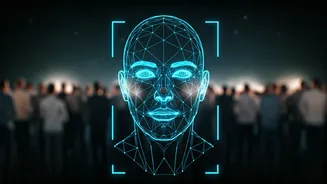
At its core, facial recognition technology (FRT) uses artificial intelligence to identify a person by analysing their unique facial features. An algorithm converts a facial image into a biometric map, which is then compared against a database of stored faces. In the context of missing persons, this means a photo of a lost child could be cross-referenced with images from CCTV footage, or pictures of children living in orphanages and shelters across the country. The goal is to find a match, even if years have passed and the person's appearance has changed. Success stories have already demonstrated its power. In a landmark trial in New Delhi, police used the technology to identify nearly 3,000 missing children in just four days by scanning images from 45,000 children in city shelters.
The Promise of Reunification
The results can be life-changing. Telangana Police’s DARPAN facial recognition tool successfully reunited a 13-year-old boy with his family five years after he went missing from Uttar Pradesh and was traced to a children's home in Assam. The software works by matching photos from First Information Reports (FIRs) of missing children with those on the TrackChild portal, a national database for missing children. Proponents argue that if such a tool can help reunite even a fraction of missing individuals with their families, its value is immeasurable. It offers a significant upgrade over manual methods, which are slow and often ineffective when dealing with the sheer volume of cases.
Not a Magic Bullet
Despite its promise, FRT is far from a perfect solution. The technology's accuracy can be hampered by real-world conditions like poor lighting, low-quality images from surveillance cameras, and different camera angles. Another significant hurdle is changes in a person's appearance over time due to ageing, which is especially pronounced in children who go missing for several years. Moreover, studies have shown that algorithms can exhibit biases, performing less accurately when identifying women and people of colour, which could lead to devastating wrongful identifications. The technology is only as good as the data it's trained on and the databases it has access to.
The Double-Edged Sword of Privacy
The most significant challenge is the ethical one. The use of FRT by law enforcement raises serious concerns about mass surveillance and the erosion of individual privacy. Building the comprehensive databases needed to find missing persons inherently involves collecting and storing the biometric data of millions of citizens, often without their explicit consent. In India, there is currently no specific law that comprehensively governs the use of facial recognition technology. This legal vacuum creates a risk that a tool intended for good could be misused for tracking and monitoring individuals, infringing on fundamental rights. Critics argue that without robust legal guardrails, the potential for abuse outweighs the benefits.