


A Cosmic Lion in the Stars
Located roughly 4,200 light-years away in the constellation Gemini, NGC 2392 is what astronomers call a planetary nebula. This has nothing to do with planets; the name is a historical holdover from when these round objects resembled planets through early
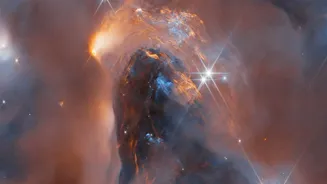
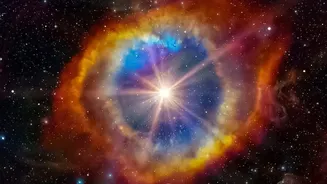
telescopes. Instead, it's the beautiful, glowing shroud of gas and dust cast off by a star similar to our Sun at the end of its life. Discovered in 1787, it has been a target for telescopes for centuries. While older images from instruments like the Hubble Space Telescope led to nicknames like the 'Clown-faced Nebula,' these new images have highlighted a structure resembling a majestic mane, leading many to now call it the 'Lion Nebula.' The new level of detail allows scientists to study its features with unprecedented clarity.
Webb's Powerful Infrared Gaze
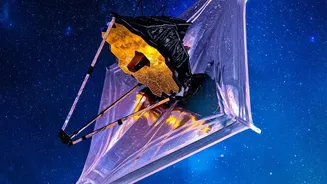
While Hubble observes the universe primarily in visible and ultraviolet light, the James Webb Space Telescope is designed to see in infrared. This is a crucial advantage for studying objects like NGC 2392. Infrared light can penetrate the clouds of gas and dust that might otherwise obscure our view. Webb's instruments, NIRCam and MIRI, have peeled back these cosmic curtains to reveal the nebula's hidden architecture. The composite images highlight features that were only hinted at before, such as dense concentrations of dust and wispy regions of ionized gas. This allows astronomers not just to see the nebula's shape, but to understand the physical processes happening within it. It’s like switching from a standard X-ray to a high-resolution MRI, providing a much deeper understanding of the subject.
Anatomy of a Stellar Finale
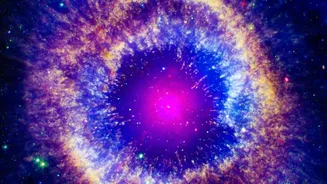
The headline feature of the new images is the clear depiction of the nebula's layers. At the center of the 'lion's face' is the hot, dense core of the original star, now a white dwarf. This tiny but powerful stellar remnant is blasting its surroundings with radiation and a fierce stellar wind. This outflow has carved out a central bubble of superheated gas, which is expanding and destroying some of the dust in its path. Surrounding this is the 'mane'—an outer shell of material from the star's earlier death throes. Within this mane, Webb's image clearly shows dense, comet-like filaments. Scientists now understand that these are tough clumps of dust that have survived the star's onslaught, protecting the material streaming behind them and creating the streaked, textured appearance of the mane. These layers offer a fossil record of how the star died, puffing off material over thousands of years.
A Glimpse of Our Sun's Distant Future
Studying planetary nebulae like NGC 2392 is more than just cosmic sightseeing; it's a way for us to look into the very distant future of our own solar system. In about five billion years, our Sun will exhaust the hydrogen fuel in its core and begin its final act. It will swell into a red giant, shedding its outer layers into space. The remaining hot core will illuminate this expelled gas, creating a planetary nebula of our very own. The processes of stellar winds and radiation shaping the gas and dust in the Lion Nebula are the same ones that will one day play out in our cosmic neighborhood. By studying NGC 2392 in such detail, astronomers can refine their models of stellar evolution and better predict the final, beautiful fate of stars like our Sun.