






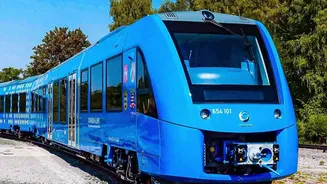
What is an LNG-Powered Train?
At its core, the newly launched train is a dual-fuel machine. Rather than running exclusively on Liquefied Natural Gas (LNG), its engines have been retrofitted to operate on a combination of both diesel and LNG. This technology allows LNG, a natural gas
cooled to a liquid state for transport, to substitute a significant portion of the diesel that a conventional engine would burn. For this trial, two 1,400-horsepower Driving Power Cars (DPCs) were converted to use this system. The key advantage is flexibility; the train can switch between fuels, ensuring it can still operate even if LNG isn't available. This makes it a practical adaptation of existing infrastructure rather than a complete and costly overhaul from the ground up.
The Real Goal: Cost and Carbon Reduction
Indian Railways is one of the nation's largest consumers of diesel, making its fuel bill and carbon footprint enormous. The primary motivation behind this LNG trial is to tackle both issues simultaneously. By substituting up to 40% of diesel with LNG, the Railways anticipates a significant reduction in operational costs. Early estimates from trial runs suggest annual savings of approximately ₹23.9 lakh for an eight-coach train. Environmentally, LNG is a cleaner-burning fossil fuel than diesel, producing lower emissions of carbon dioxide, nitrogen oxides (NOx), and harmful particulate matter. This initiative is a key component of Indian Railways' ambitious plan to become a 'Net Zero Carbon Emitter' by 2030, a goal that requires a multi-pronged approach of electrification and exploring alternative fuels.
A Trial, Not a Transformation—Yet
Officials have been clear that this launch marks the beginning of an extensive trial, not an immediate network-wide change. Before this public rollout, the converted engines underwent over 2,000 kilometres of field trials to test their performance and reliability. The purpose of running the train on a public route, like the inaugural journey between Sabarmati and Mahesana, is to gather real-world data on everything from fuel efficiency to maintenance needs. A full-scale shift to LNG across the country's vast rail network would require a massive investment in new infrastructure, including cryogenic storage facilities and a robust distribution network for the super-cooled fuel. This trial is the first step in determining if that long-term investment is viable.
How Does This Fit into the Bigger Picture?
The LNG train doesn't exist in a vacuum. It's part of a broader strategy by Indian Railways to modernize and decarbonize. The main pillar of this strategy is the rapid electrification of its broad-gauge network. However, electrifying every single route, especially in remote or difficult terrain, may not be economically or logistically feasible in the short term. This is where alternative fuels like LNG and, in separate trials, hydrogen, come into play. They offer a 'bridge' solution—a way to reduce emissions and diesel dependence on non-electrified tracks. While a hydrogen-powered train represents a more radical technological leap with zero direct emissions, the dual-fuel LNG model offers a more immediate and adaptable way to make existing diesel fleets cleaner.