






An End to the Unpacking Ritual
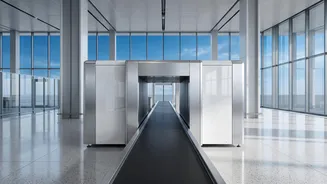
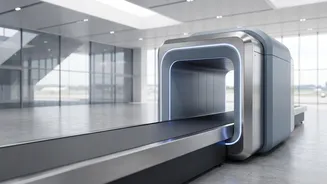
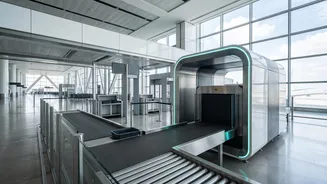
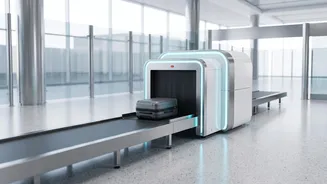
Dubai Airports is gradually replacing its conventional security equipment with advanced Computed Tomography (CT) scanners across its terminals. Unlike traditional 2D X-ray machines, these state-of-the-art systems provide high-resolution, 3D images of the contents
of your carry-on luggage. This allows security personnel and sophisticated AI algorithms to get a clear, detailed look inside your bag without you needing to remove large electronics or liquids. For passengers, this means a significant reduction in hassle and faster processing times at one of the most stressful points of the airport journey. The long-standing routine of fumbling for your laptop and organising miniature toiletries could soon be over.
How the New Scanners Work
The technology making this possible is similar to CT scanners used in the medical field. The HI-SCAN 6040 CTiX scanners, supplied by Smiths Detection, create a detailed 3D model of your bag's contents, which can be rotated and examined from every angle by security staff. Artificial intelligence helps the system to automatically identify objects and assess potential threats with a high degree of accuracy. This advanced imaging capability is what enables the system to differentiate between benign liquids and electronics and potentially dangerous materials, even when they are densely packed in a bag. The goal, according to Dubai Airports CEO Paul Griffiths, is to make the process “slicker, quicker, faster, and more convenient” for everyone.
Your Face Becomes Your Passport
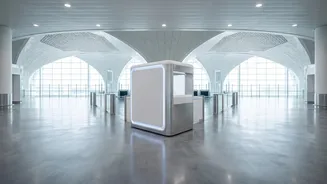
Beyond the security lanes, Dubai is also pushing the boundaries of seamless travel with its investment in biometric technology. The airport is expanding its network of Smart Gates and even more advanced 'smart corridors' that use facial and iris recognition to verify a traveller's identity. In the first half of 2026 alone, over 9.4 million passengers used these smart travel services. In some terminals, passengers who have registered their biometric data can simply walk through a designated lane without stopping to present their passport. The system verifies their identity in seconds, drastically reducing queues at immigration. This passport-free experience is part of Dubai’s broader ‘Smart Travel’ initiative, which aims to create a fully digital and touchless journey from check-in to boarding.
When and Where to Expect Changes
The rollout of these new technologies is a gradual, ongoing programme of continuous upgrades across all terminals at DXB. The new CT scanners and biometric systems are already being installed, with the airport authority aiming to eventually replace all older equipment to ensure a consistent experience for all passengers. However, because the implementation is phased, travellers should not assume every security lane or immigration counter will be equipped with the new technology just yet. It is crucial for passengers to continue following the directions of airport security staff. If you are asked to remove your laptop or liquids, you must still do so. This phased approach allows the airport to upgrade its systems without causing major disruptions to the millions of passengers who pass through its gates each month.
What This Means for Your Next Trip
The primary benefit for travellers is a faster and less stressful airport experience. Reduced queueing times at security and immigration mean more time to relax before your flight. The convenience of leaving electronics and liquids in your bag simplifies the screening process immensely. For the biometric systems, eligible travellers may be prompted to register their details at the airport to take advantage of the seamless immigration process on future trips. While the transition is still in progress, these upgrades signal a clear direction for Dubai Airports: leveraging technology to prioritise passenger convenience without compromising on world-class security. The future of air travel is not just about getting to your destination; it's about making the journey itself as smooth as possible.