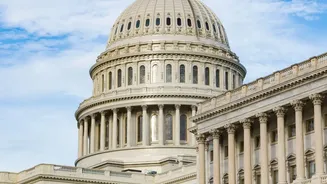








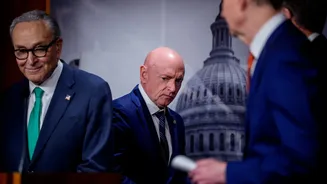
The results of the US midterm elections are in, delivering a significant victory for the Democratic party. Now, as Washington processes a new political reality, global investors are watching closely for what it means for the world's largest economy and
its key partners, especially India.
A New Political Landscape in Washington
American voters delivered a resounding victory for the Democrats, who have taken control of both the House of Representatives and the Senate. This outcome is being widely interpreted as a rebuke of President Donald Trump's policies, with voter dissatisfaction over the war with Iran, rising fuel prices, and general economic anxiety cited as key factors. With Democrats now controlling Congress, they have gained significant power to scrutinize the administration's agenda, constrain federal spending, and block presidential nominees. This shift dramatically alters the power dynamics in Washington for the remaining two years of Trump's term and sets the stage for a new phase in US policy, both domestic and foreign.
Trade, Tariffs, and a Sigh of Relief
For India, one of the most immediate impacts is on trade. The Trump administration's use of tariffs and focus on bilateral trade deficits has created friction in the otherwise strong India-US relationship. With Democrats in control of Congress, analysts believe the pressure on New Delhi to finalize a trade deal may ease. The new Congress is expected to increase scrutiny of the President's unilateral tariff policies, potentially limiting his ability to impose sudden duties. Reports suggest the urgency for India to conclude a trade agreement has faded, as the risk of surprise tariff hikes is now lower. While existing tariffs are unlikely to disappear overnight, the change in Washington provides India with more breathing room in negotiations.
The Investor's Perspective: Stability and Sentiment
Global investors dislike uncertainty, and the recent period of escalating trade tensions has kept markets on edge. The midterm results, by creating a check on the president's more unpredictable trade actions, are seen as a potential positive for market sentiment. A divided government in the US could lead to less policy volatility, which is generally welcomed by investors. For India, this could translate into a more stable environment for foreign investment flows. A softer US dollar and declining US Treasury yields following the election results could make emerging markets like India more attractive to foreign portfolio investors. However, experts caution that while the election outcome may improve sentiment, domestic factors like corporate earnings and valuations will remain the primary drivers for Indian equities.
Energy Prices and Geopolitical Shifts
The election results could also have a significant impact on global energy markets, a critical factor for India's economy. President Trump's aggressive stance on Iran has been a key driver of high oil prices. With a Democratic-controlled Congress likely to challenge the administration's foreign policy and military spending, there may be increased pressure for a diplomatic resolution. Any de-escalation would likely lead to a cooling of crude oil prices, providing major relief for India, a country heavily dependent on oil imports. Already, Brent crude prices have fallen from their recent highs, partly due to an unwinding of the geopolitical risk premium, which is a clear macroeconomic positive for India.
Strategic Alignments Remain, But Nuances Emerge
Beyond trade and economics, the India-US relationship is built on a strong strategic foundation, particularly regarding defense cooperation and countering China's influence in the Indo-Pacific. This core alignment is supported by both Democrats and Republicans and is not expected to change. However, the new Congress may bring increased scrutiny on other issues, such as India's purchases of Russian oil and defense equipment. Similarly, key sectors like Information Technology and Pharmaceuticals will be watching for any shifts in US policy on immigration, H_1B visas, and drug pricing. While the big picture of the strategic partnership remains intact, the details and diplomatic approach on several fronts may now be subject to new debates and pressures.