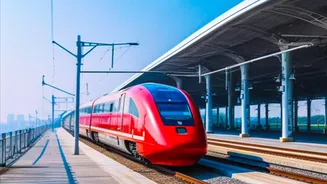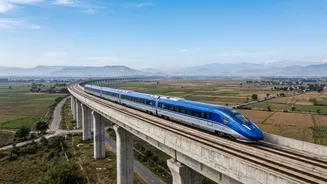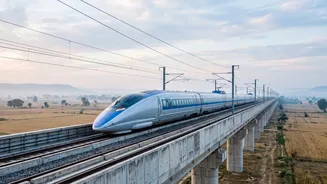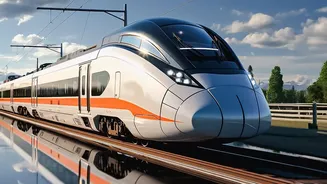






The Grand Vision: What is the Project?
The 59-minute Delhi-Agra trip is a key segment of a much larger vision. This route is part of the proposed Delhi-Varanasi High-Speed Rail (DVHSR) corridor, one of seven new bullet train projects announced by the government to modernise India's passenger
rail network. Spearheaded by the National High Speed Rail Corporation Limited (NHSRCL), this specific corridor will stretch over 800 kilometres, connecting the national capital to major cities in Uttar Pradesh. Recent announcements have revealed plans to extend the line even further, creating a massive network that could eventually run from Delhi all the way to Guwahati in Assam, passing through cities like Patna and Siliguri.
A Sub-One-Hour Journey to the Taj Mahal
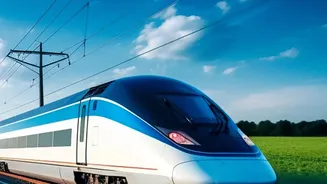
The standout feature is the dramatic reduction in travel time. Railway Minister Ashwini Vaishnaw has confirmed the indicative time of 59 minutes for the Delhi-Agra stretch. To put this in perspective, the current fastest train, the Gatimaan Express, takes about 100 minutes to cover the same distance. This high-speed connection is expected to be a game-changer for tourism, making day trips to Agra's iconic Taj Mahal significantly more accessible for both domestic and international visitors. The project anticipates using advanced Shinkansen (bullet train) technology, with trains operating at speeds up to 350 km/h.
Mapping the Route and Stations
The proposed route for the Delhi-Varanasi corridor is planned to start from Sarai Kale Khan in Delhi. From there, it will pass through key locations including Noida, Jewar (where an international airport is located), Mathura, Agra, Etawah, Kanpur, Lucknow, Rae Bareli, Prayagraj, and Bhadohi before terminating in Varanasi. The indicative travel times for other sections are equally impressive: Delhi to Lucknow in just over two hours and the full Delhi to Varanasi journey in about 3 hours and 33 minutes.
Current Status and What Comes Next
The project, while approved by the Prime Minister, is still in its early stages. The National High Speed Rail Corporation Limited has completed and submitted the Detailed Project Report (DPR) to the Ministry of Railways for the corridor, which is a critical step involving extensive surveys and feasibility studies. Following finalisation, the DPR will go to the Union Cabinet for ultimate approval. While preliminary work like aerial LiDAR surveys has been conducted, major steps like land acquisition and the start of physical construction are still on the horizon, likely beginning in earnest after all clearances are secured.
The Bigger Picture: Benefits and Hurdles
The potential benefits of the northern corridor are immense. Beyond boosting tourism, the project is expected to spur economic development across Uttar Pradesh and other connected states, benefiting small-scale industries and creating jobs. It promises faster, more convenient travel for business, education, and healthcare purposes. However, the path forward is not without significant challenges. High-speed rail projects come with enormous costs, estimated to be in the lakhs of crores. Furthermore, land acquisition is a notoriously complex and time-consuming process in India, often facing legal and social hurdles that can lead to long delays.