


The Moon's Cold Traps
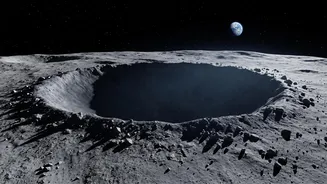
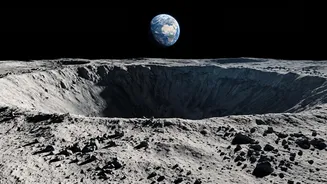
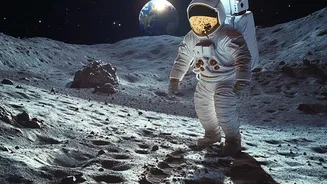
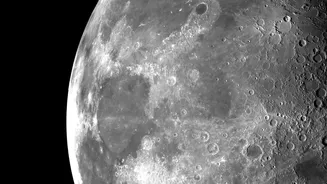
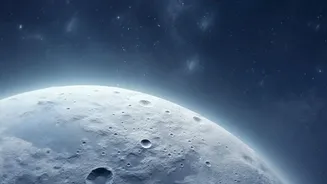
The key to this potential survival lies in the Moon's Permanently Shadowed Regions, or PSRs. These are areas, typically within deep craters near the lunar poles, that never receive direct sunlight. Due to the Moon's slight axial tilt, the sun's rays skim
over the poles at a very low angle, leaving the floors of some craters in perpetual darkness and extreme cold. While most of the lunar surface is blasted by intense ultraviolet (UV) radiation and experiences wild temperature swings, these PSRs are shielded, creating a much more stable, albeit frigid, environment. This protection from direct solar radiation is what makes scientists believe these niches could be less hostile to microbial life than previously assumed.
Meet Earth's Toughest Travellers
The study didn't just look at any microbes; it focused on organisms known for their incredible resilience and those commonly found in environments like the International Space Station. The list included several bacteria and fungi. One of the standout survivors in the simulation was a fungus called Aspergillus niger, a common mould that can be found in damp bathrooms on Earth. Surprisingly, it showed the highest resistance to UV radiation, even outperforming the famous bacterium Deinococcus radiodurans, which is legendary for its ability to withstand massive radiation doses. Other microbes in the study included Bacillus subtilis, Staphylococcus aureus, and species of Fusarium. Many of these are not even considered 'extremophiles' in the traditional sense, which made their potential to survive on the Moon even more surprising to the researchers.
Simulating a Lunar Stay
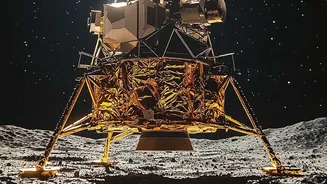
To be clear, scientists didn't send fungi to the Moon for this experiment. Instead, they conducted sophisticated lab simulations. Researchers led by NASA's Goddard Space Flight Center used detailed environmental maps created from data gathered by the Lunar Reconnaissance Orbiter. They combined this topographic and temperature data with models of how solar and cosmic radiation strikes the surface at three potential Artemis mission landing sites near the south pole. They then compared these simulated lunar conditions against the known survival limits of the selected microbes. The results produced maps of 'survivable niches'—small pockets ranging from the size of a bootprint to a larger crater floor where these organisms could potentially remain viable.
Survival, Not Growth
It is crucial to understand the difference between survival and thriving. The study suggests these microbes could enter a dormant, cryptobiotic state for at least a few days, and possibly much longer in the most shielded areas. This means they are not growing, reproducing, or forming a lunar ecosystem. The Moon still lacks the essential ingredients for life as we know it to flourish, most notably liquid water and an atmosphere. However, the very fact that they might survive has significant implications for planetary protection. As humans prepare for a permanent presence on the Moon, it becomes vital to understand what contamination we might be bringing with us.
Why This Matters for India and the World
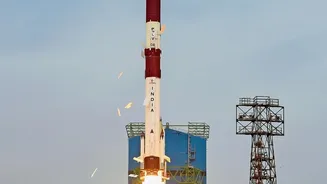
These findings are particularly relevant as global interest in the lunar south pole intensifies, an area where India's Chandrayaan missions have made pioneering contributions. The Artemis program, which plans to land astronauts in this same region, will have to contend with the issue of microbial contamination. Scientists need to establish a baseline of what the Moon is like before we introduce Earth life, to ensure that if we ever find signs of ancient chemistry or biology, we know it's not something we brought ourselves. On the other hand, these hardy microbes also raise fascinating questions. Some scientists have proposed that ancient impacts could have blasted rocks from Earth to the Moon, and if any microbes hitched a ride, the PSRs might have preserved them in a deep freeze for eons.