
The Star Player: Drumstick (Moringa)
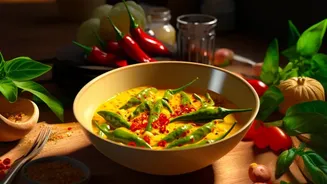
The heart and soul of this soup is the drumstick, or 'murungakkai'. It's not just a vegetable; it's a superfood. The pods of the Moringa oleifera tree, drumsticks have a subtly sweet, asparagus-like flavour and a tender texture when cooked. To eat them,
you simply scrape the soft pulp and seeds with your teeth, discarding the tough outer skin. But their real power lies in their nutritional profile. Drumsticks are packed with Vitamin C, which boosts immunity, and are a great source of calcium and phosphorus, essential for strong bones. They also contain anti-inflammatory compounds and antioxidants that help protect the body's cells from damage. This humble vegetable turns a simple dal into a powerhouse of wellness.
The Foundation: Hearty Lentils
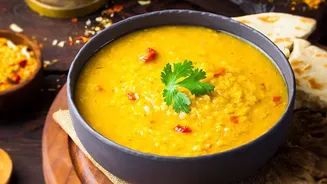
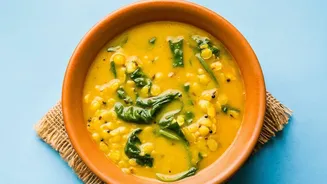
No dal soup is complete without its foundational element: the lentils. Most commonly, drumstick dal soup uses toor dal (split pigeon peas). When cooked, toor dal breaks down into a creamy, thick consistency that gives the soup its comforting body. It’s also a fantastic source of plant-based protein and dietary fibre, which aids in digestion and helps you feel full longer. Some recipes might use moong dal or masoor dal for a lighter texture, but toor dal provides that classic, hearty base that stands up to the other bold flavours in the dish. Think of the lentils as the comforting, reliable canvas upon which the rest of the culinary art is painted.
The Tang and Spice: Tamarind and Sambar Powder
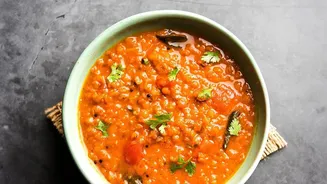
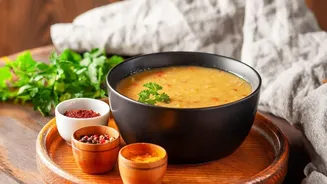
What gives drumstick soup its signature tangy, spicy, and deeply complex flavour? It's a duo of tamarind and sambar powder. Tamarind pulp provides a sour, fruity note that cuts through the richness of the lentils and brightens the entire dish. It’s the essential counterpoint that makes the soup so refreshing. Then comes the sambar powder, a magical blend of roasted and ground spices. While recipes vary, it typically includes coriander seeds, cumin seeds, fenugreek, dried red chillies, and roasted lentils like chana and urad dal. This isn't just about heat; it's about creating layers of earthy, aromatic, and warm flavours that define South Indian sambar.
The Final Flourish: The Aromatic 'Tadka'
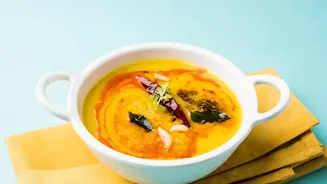
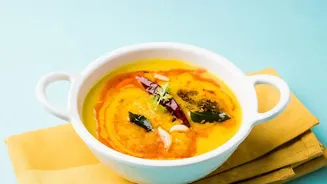
Just when you think the soup is done, there's one final, crucial step: the 'tadka' or tempering. This is where the soup truly comes alive. A small amount of ghee or oil is heated in a separate pan, and whole spices are sizzled until they release their essential oils. Common tadka ingredients for this soup include mustard seeds, which pop and sputter, a pinch of asafoetida (hing) for its unique savoury aroma, dried red chillies for a touch of heat, and a sprig of fresh curry leaves. This fragrant, sizzling mixture is immediately poured over the finished dal, infusing it with a final burst of incredible aroma and flavour. It's a technique that elevates the dish from simply cooked to beautifully finished.