
The Ambitious Coastal Connection
For years, a faster, more comfortable train journey between the tech hub of Bengaluru and the coastal city of Mangaluru has been a top priority for Karnataka. The existing railway line, while vital for passengers and freight, is slow and arduous. The introduction
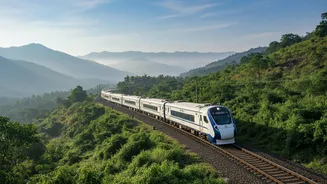
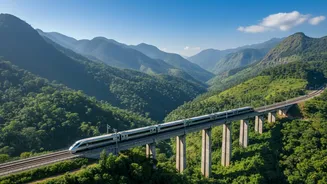
of a Vande Bharat Express service promises to slash travel time and provide a significant boost to tourism, trade, and regional connectivity. The vision is clear: a seamless, high-speed link between the state capital and its important coastal belt. However, turning this vision into a reality involves conquering one of India's most challenging railway terrains.
The Wall of the Western Ghats
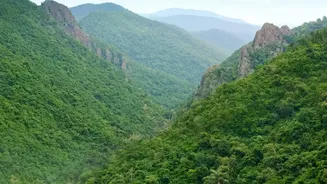
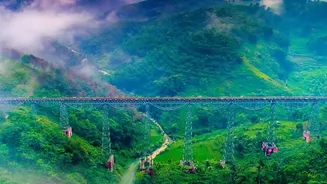
The primary obstacle is the 55-kilometre Sakleshpur-Subrahmanya Road section, which cuts through the heart of the Western Ghats. This stretch is an engineering marvel born of necessity, but also a constant operational challenge. It is characterized by extremely steep gradients, with a ruling gradient of 1-in-50, meaning the track rises one metre for every 50 metres travelled. The line navigates this elevation change through a staggering 57 tunnels and across 226 bridges, all while twisting through 108 sharp curves. This complex geography is compounded by the region's heavy monsoon season, which brings a high risk of landslides and rockfalls, sometimes disrupting services for days.
An Engineering Mismatch
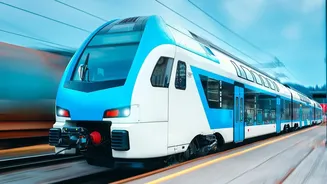
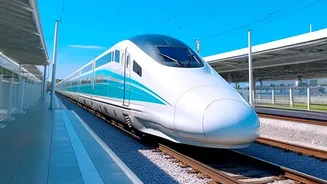
Vande Bharat trains are Electric Multiple Units (EMUs), designed for speed and rapid acceleration on relatively flat terrain. Their distributed power system, where multiple coaches have motors, is excellent for the plains but presents unique issues in the Ghats. Conventional trains navigating this section use 'banker' locomotives—extra engines attached at the rear to provide additional power for climbing and braking control for descending. However, attaching and detaching bankers to a Vande Bharat trainset is impractical due to its integrated, aerodynamic design. The train's standard regenerative and electro-pneumatic braking systems are highly efficient but may not be sufficient to safely manage the steep, continuous descent on their own, where precise speed control is paramount for safety.
Putting Safety to the Test
Recognizing these challenges, the South Western Railway has initiated extensive field trials. In mid-August 2026, a specially manufactured 20-car Vande Bharat rake was brought to the Sakleshpur-Subrahmanya section for rigorous testing. The key innovation being evaluated is a built-in Automatic Emergency Braking (AEB) system. This system is designed to automatically apply the brakes if the train exceeds the strict speed limit of 30 kmph mandated for the Ghat section. Personnel from the Research Designs and Standards Organisation (RDSO) are on board to assess critical parameters like braking distance, stability on curves, and overall performance under these unique conditions. These trials, scheduled to continue until August 20, are the most crucial step in determining if the service is operationally feasible.
The Path Forward
Even with the electrification of the entire Bengaluru-Mangaluru route completed, the future of the Vande Bharat service hinges entirely on the outcome of these safety trials. The data collected by the RDSO will be scrutinized by the Railway Board and the Commissioner of Railway Safety before any green signal can be given. Success would not only pave the way for one of India's most scenic train journeys but also mark a significant achievement in adapting modern technology to extreme geographical constraints. Failure would mean returning to the drawing board, possibly to explore different technological solutions or accept that, for now, the Ghats remain a challenge too great for India's premier semi-high-speed train.