




From Royal Grandeur to Refined Detail
For centuries, gilding—the art of applying a thin layer of gold—was a symbol of immense wealth and power. Think of the grand halls of Versailles or the divine art of the Byzantine era, where gold was used lavishly to create a sense of awe. But today’s
approach to gold in our homes is entirely different. The trend has shifted from covering entire surfaces to using gold leaf and metallic finishes in a more restrained, thoughtful way. Instead of being the focal point, modern gilding is the supporting act that enhances everything around it. It’s less about announcing wealth and more about creating warmth, reflecting light, and adding a touch of a story to a space.
The Power of a Subtle Highlight
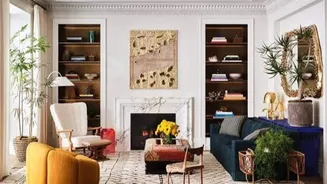
In contemporary design, gilding is used to catch the eye and guide it. A thin gilded edge on a mirror frame, the inner surface of a lampshade, the legs of a coffee table, or a delicate line in an abstract painting can transform an ordinary object into a statement piece. This technique is about precision and intention. Designers use it to highlight architectural details that might otherwise go unnoticed, such as moldings, cornices, or even the edge of a staircase. The goal is to create a moment of surprise and sophistication. In a minimalist room, a single, well-placed gold accent can add depth and prevent the space from feeling cold or one-dimensional.
Finding Your Finish: Not All Gold Is Polished
Part of this new subtlety comes from an expanded palette of finishes. The brash, shiny yellow gold of the past has been joined by a host of more subdued options. Brushed gold, matte gold, and champagne gold offer a softer, more modern feel. These finishes provide the warmth of gold without the high-shine glare, making them easier to integrate into various design styles. There are also alternatives to genuine gold leaf, such as metallic paints, foils, and imitation leaf, which make the trend more accessible. These materials can be used to achieve a similar effect for a fraction of the cost, allowing homeowners to experiment with gilding on everything from furniture to accent walls.
Perfect Pairings: Colours and Textures
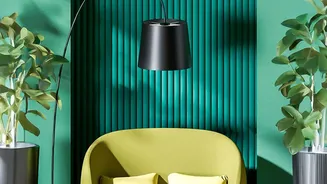
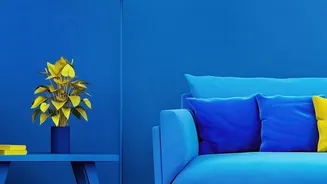
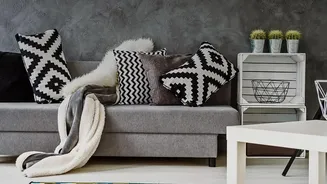
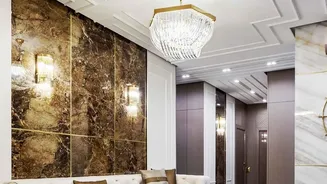
Modern gilding shines brightest when paired with the right materials and colours. Rather than competing with other bold elements, it works beautifully alongside neutral and natural palettes. Think of the warmth of a gold accent against a backdrop of soft whites, deep greys, or earthy beiges. It also creates a stunning contrast with rich, saturated colours like emerald green and deep blue. Texturally, gold complements a wide range of materials. It can soften the hard edge of concrete, add warmth to cool marble, and enhance the organic feel of natural wood. The interplay between the smooth, reflective quality of the gold and the texture of the surrounding materials creates a rich, layered, and inviting interior.