





A Different Kind of Martian Hole
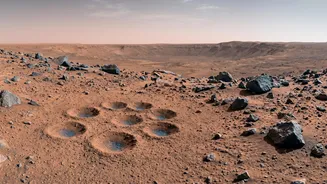
Holes are certainly not a new phenomenon on Mars. The planet's surface is scarred by meteorite impacts, and geological processes have created various pits and cavities over billions of years. But the recent discovery in a broad valley named Valle Grande
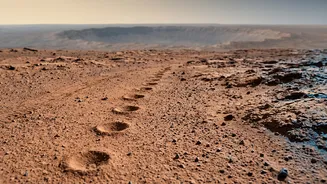
is different. These depressions, one of which measures just a centimetre across, are unusually broad and shallow. Typically, small pits in Martian bedrock are explained by a straightforward process: hard pebbles or mineral nodules embedded in softer rock resist erosion longer than their surroundings. Eventually, these harder bits weather away, leaving a small cavity behind. The mystery with these new holes is that they don't fit this model. Scientists have noted there are no obvious pebbles or nodules nearby that look like they once occupied these shallow divots, leaving them without a ready explanation.
Gathering Clues on Mount Sharp
The discovery comes as Curiosity makes its ascent up Mount Sharp, a 5.5-kilometre-high mountain in the centre of Gale Crater. The rover has been climbing this mountain since 2014, studying its layers like pages in a history book that reveal how Mars transformed from a world with water to the arid planet we see today. The holes were found in a new area for the rover, as it works its way through sulfate-rich rock layers. Just before encountering the holes, Curiosity had been investigating a strange, web-like terrain known as "boxwork," believed to have been formed by groundwater billions of years ago. The science team is now using the rover's suite of instruments to get a closer look. The Mars Hand Lens Imager (MAHLI) is taking close-up photographs, while the Mastcam cameras capture overlapping stereo images. These images can be combined to create three-dimensional models, allowing researchers to precisely measure the shapes and depths of the pits, which may help them work backwards to figure out how they formed.
Theories and Possibilities
While NASA scientists are currently avoiding definitive explanations, the find has opened up several possibilities. The holes could be the result of an unfamiliar erosion process, a unique property of the specific rock type in this region, or another factor that has yet to be identified. This isn't the only puzzle in the area. Researchers have also noticed rapid changes in the appearance of adjacent rock layers, with some tough, grey layers resisting erosion differently than their neighbours. This suggests that the environmental conditions when these rock layers were deposited may have changed rapidly. To investigate this, Curiosity has been directed to sample the chemistry of these unusual layers, though analysing that data will take time. For now, the origin of these strange holes remains a geological mystery. There is currently no evidence to suggest they were formed by biological activity.
Why Small Holes Matter
The fascination with these small holes isn't just about their novelty. Every texture, fracture, and mineral on Mars holds clues about the planet's past. Understanding how these pits formed could provide valuable insight into the specific geological and environmental forces at play in this particular region of Mount Sharp. The different layers the rover is currently exploring already show variations in texture and chemistry over very small distances. Scientists believe this is consistent with changing conditions under which the original sediments were deposited. By piecing together these small-scale puzzles, the mission team hopes to build a more complete picture of the dramatic climate shift in Mars's history. After more than 5,000 Martian days on the Red Planet, Curiosity continues to fulfill its primary mission: reading the rocks to understand how Mars evolved.