




What is 'Space Sugar'?
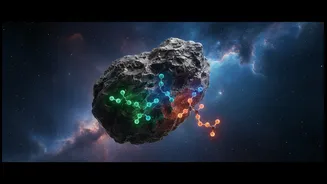
When scientists talk about 'space sugar,' they aren't referring to the type you stir into your coffee. They are talking about bio-essential sugars, which are fundamental building blocks for life as we know it. The most significant of these is ribose,
a crucial component of Ribonucleic Acid, or RNA. In modern life, RNA is a vital molecule that reads genetic instructions from DNA to build the proteins that carry out essential functions in our cells. For years, scientists found other building blocks of life, like amino acids (the components of proteins) and nucleobases (the components of DNA and RNA), in meteorites. Sugars, however, were the missing piece of the puzzle, and their discovery in extraterrestrial rocks provides a major clue in the story of our origins.
The Cosmic Delivery Service
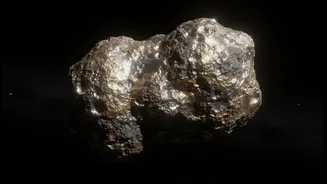
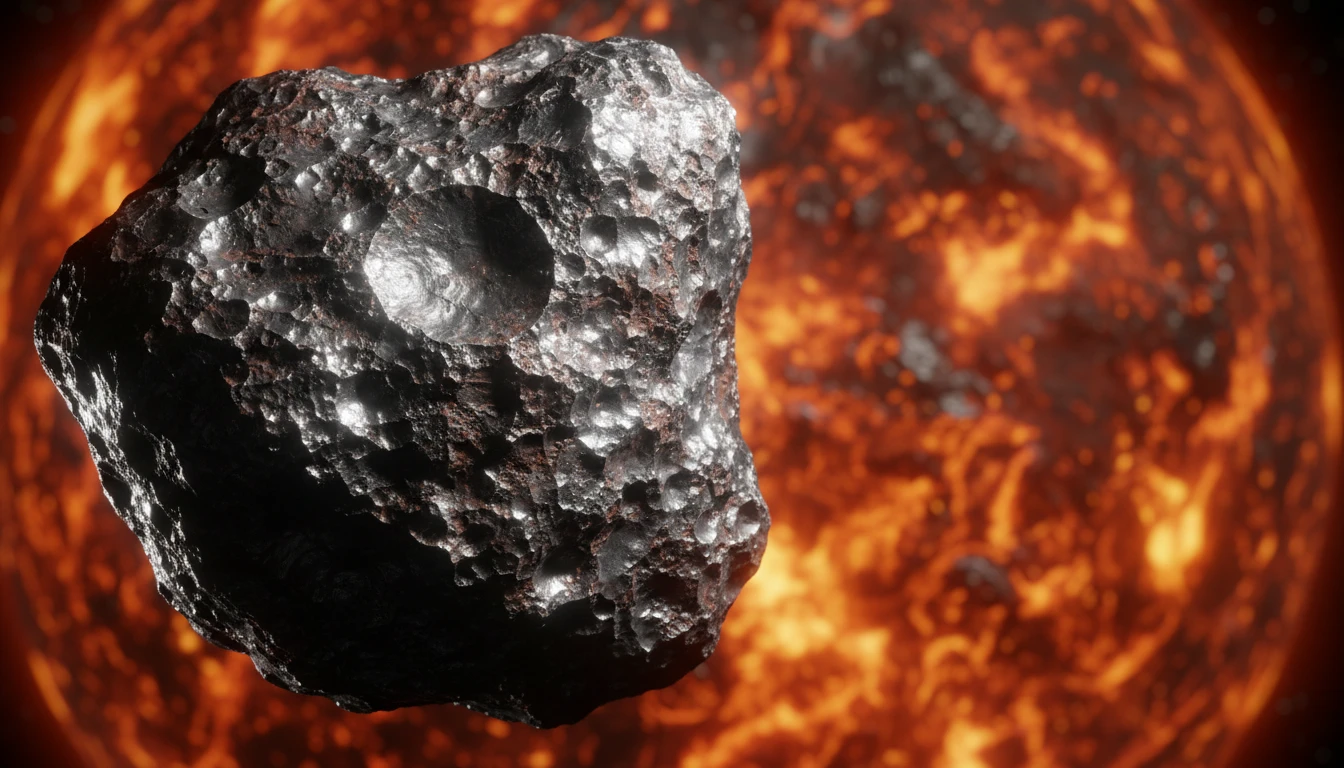
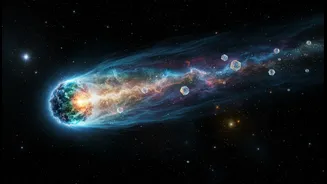
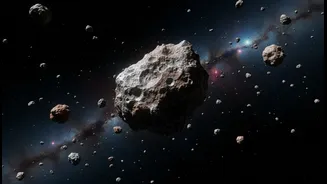
The leading theory is that asteroids and comets acted as a sort of cosmic delivery service. These objects are ancient remnants from the formation of our solar system about 4.6 billion years ago. As they travelled through space, chemical reactions inside them could have formed some of life's key ingredients. Early Earth was subjected to a period of intense meteorite bombardment. Scientists believe these impacts may have delivered not only water but also a cocktail of organic molecules to the planet's surface. The idea is that molecules as seemingly fragile as ribose could be formed and preserved within these rocky vessels, surviving the fiery journey through the atmosphere to seed the sterile, early Earth with the raw materials needed for life to begin.
Evidence Written in Stardust
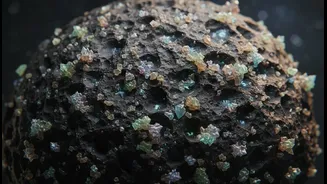
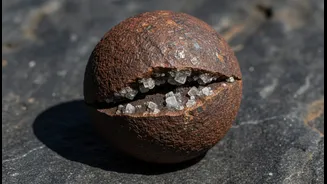
This isn't just a theory; it's backed by physical evidence. An international team of scientists made a breakthrough by discovering ribose, along with other sugars like arabinose and xylose, in two carbon-rich meteorites named NWA 801 and Murchison. To ensure the sugars weren't just contamination from Earth, they performed detailed isotope analysis, which confirmed their extraterrestrial origin. More recently, pristine samples returned from the asteroid Bennu by NASA's OSIRIS-REx mission also revealed the presence of ribose and, for the first time in an extraterrestrial sample, glucose. The Bennu samples are particularly important because they were collected directly from the asteroid and sealed, minimizing terrestrial contamination and providing a cleaner look at the chemistry of the early solar system.
A Boost for the 'RNA World'
The discovery of extraterrestrial ribose is a significant boost for what is known as the 'RNA World' hypothesis. This is the idea that before the emergence of DNA and proteins, life on Earth was based on RNA. In this scenario, RNA would have performed the dual roles of storing genetic information (like DNA) and catalysing chemical reactions (like proteins). For this to be possible, a steady supply of ribose would have been needed on early Earth. Finding ribose in meteorites and asteroid samples suggests that a reliable external source existed, potentially delivering this key ingredient and helping to kickstart the processes that eventually led to the origin of life. The fact that all the other components of RNA—nucleobases and phosphates—have also been found in the Bennu samples makes this cosmic delivery theory even more compelling.
What Comes Next in the Search?
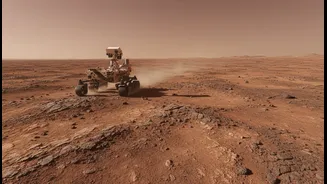
While these discoveries are a monumental step forward, they are not the final word. Scientists are continuing to analyse the precious samples from asteroid Bennu, hoping to understand the full inventory of organic molecules that were present in the early solar system. Researchers are also exploring how these simple sugars could have formed in space. Some theories suggest they were created by reactions in pockets of salty water within asteroids billions of years ago, while others point to processes on icy dust grains in the vastness of interstellar space. These findings make the search for life beyond Earth more optimistic. If the building blocks of life were widespread in our own solar system, it raises the possibility that other worlds, like Mars or the icy moons of Jupiter and Saturn, may have been seeded with the same life-giving ingredients.