




A New Commercial Highway to the Moon
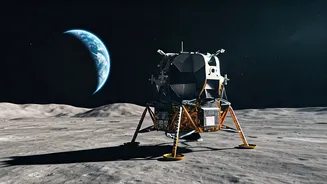
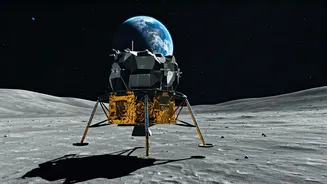
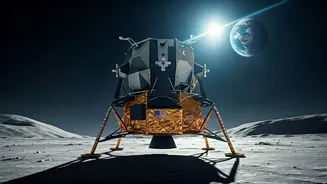
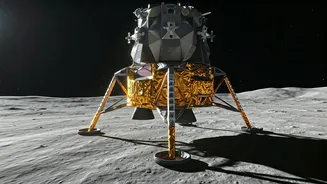
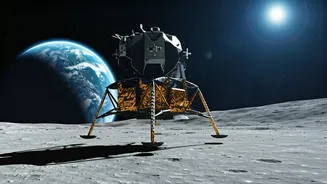
NASA's Commercial Lunar Payload Services (CLPS) initiative represents a fundamental shift in how the agency approaches space exploration. Instead of building and operating its own lunar landers for robotic missions, NASA is buying payload delivery as
a service from a growing pool of American companies. This program, established in 2018, provides fixed-price contracts to these vendors, tasking them with everything from launch and transit to a safe touchdown on the lunar surface. This approach fosters a competitive commercial ecosystem, driving innovation and lowering costs. The goal is to create a regular cadence of missions, with at least two deliveries expected per year, laying the scientific and logistical groundwork for the larger Artemis program, which aims to establish a long-term human presence on the Moon.
The Big Problem with Heavy Landings
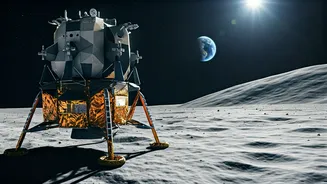
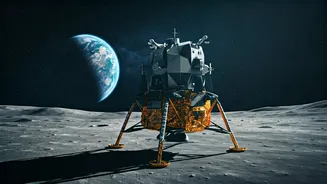
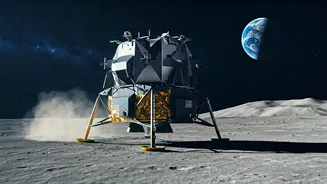
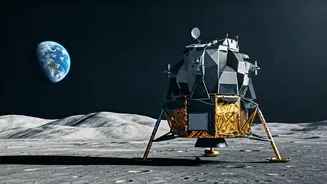
Landing a small, robotic probe on the Moon is difficult enough, as demonstrated by the mixed success of early CLPS missions. However, the challenges multiply when dealing with heavy landers, the kind needed to deliver habitats, large rovers, and eventually, the cargo for a sustainable human outpost. One of the biggest obstacles is known as plume-surface interaction. A powerful rocket engine, necessary to decelerate a heavy craft, kicks up a high-velocity spray of lunar dust and rocks. This debris can damage the lander's sensitive instruments, obscure its navigation sensors during the critical final seconds of descent, and pose a significant hazard to any existing hardware on the surface. Safely landing a multi-ton payload requires advanced navigation systems that can autonomously identify and avoid hazards like boulders and steep crater rims in real-time.
Scouting and Solving with Smaller Landers
This is where the smaller, more frequent CLPS missions prove their value. They act as robotic scouts, testing the very technologies needed to de-risk future heavy landings. For instance, NASA has flown advanced laser-based sensors on CLPS landers to test their ability to enable safe and precise landings. Payloads like the Stereo Cameras for Lunar Plume-Surface Studies (SCALPSS) are specifically designed to capture exactly how a lander's engine affects the lunar terrain, providing crucial data for designing safer systems for future missions. These missions also survey potential landing sites, gathering information on the local geology and radiation environment. By using these lower-cost missions as a testbed, NASA can refine its landing technologies, from hazard detection algorithms to navigation Doppler LiDAR, ensuring they are robust before they are integrated into a large-scale human lander.
Paving the Way for Artemis and Beyond
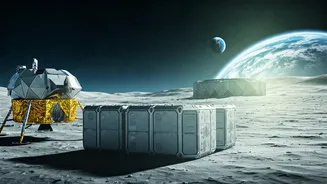
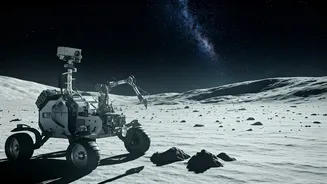
Every piece of data gathered by CLPS missions directly feeds into the Artemis program's goal of building a permanent lunar base. Recent contract awards under the CLPS program, announced on June 30, 2026, specifically focus on delivering science instruments and infrastructure to the lunar surface in 2028, supporting this long-term campaign. These upcoming missions, including those from companies like Intuitive Machines, Firefly Aerospace, and Astrobotic, are tasked with delivering increasingly heavy and complex payloads. This incremental scaling up, from small science packages to larger rovers and infrastructure, provides invaluable operational experience. It allows both NASA and its commercial partners to understand and overcome the challenges of lunar logistics before astronauts' lives are on the line, ultimately making the monumental task of returning humans to the Moon, and keeping them there safely, a more achievable reality.